
Indonesia
Bali
Rice terraces, temples and ocean
Bali is nothing like what you picture before you go. Beyond the Instagram clichés, there are thousand-year-old temples lost in the mist, rice terraces sculpted like works of art, and a spirituality that runs through every gesture of daily life.
At a glance
Exchange rates and flight times are approximate.
Why Bali
The inland rice terraces
Tegallalang, Jatiluwih, Sidemen: landscapes shaped by hand for centuries, far from the crowds of the south.
Temples & ceremonies
Uluwatu at sunset, Tirta Empul for purification, Besakih on the slopes of the volcano. Bali hums with daily rituals.
Coast & neighboring islands
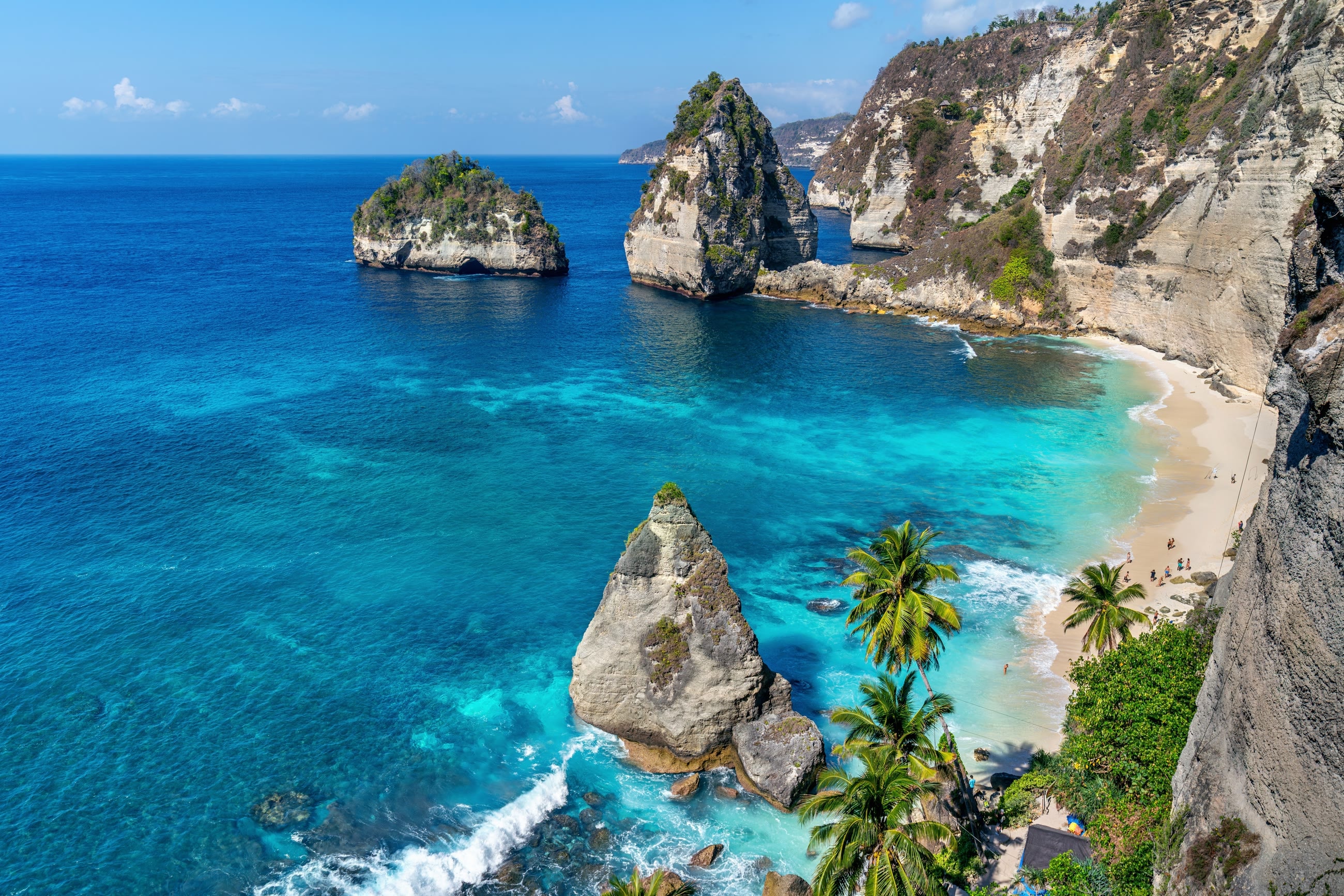
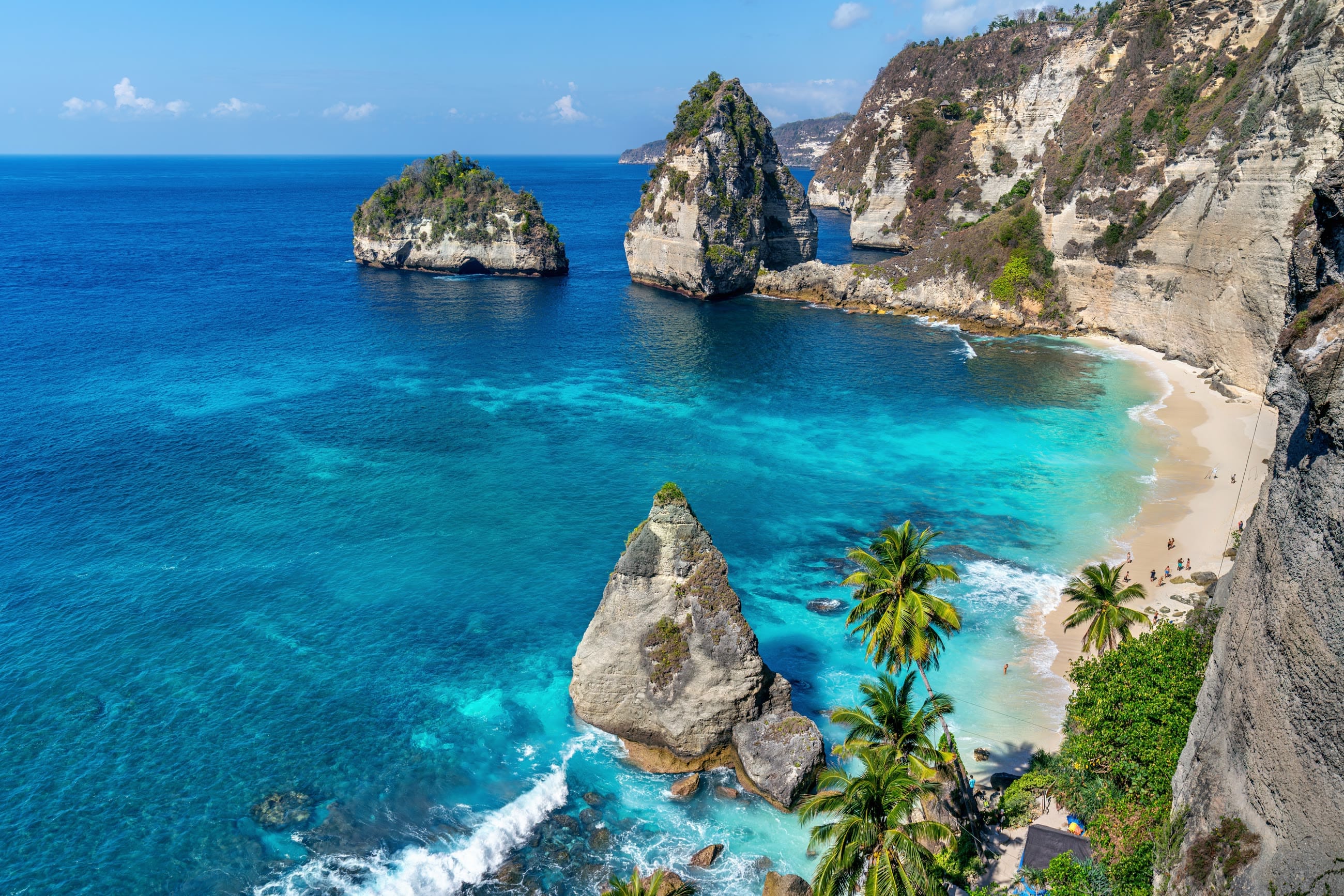
Nusa Penida and its dizzying cliffs, the surf spots of Uluwatu, the underwater world of Amed. The Indian Ocean in all its glory.
The right season for Bali
April to October (dry season): the safe choice, with dry weather, pleasant temperatures (28-30°C) and little rain. November to March: rainy season (showers mostly late in the day, high humidity); avoid it if beaches and diving are the priority, though it can be defended for the rice terraces, the lower prices and the thinner crowds. June to August: peak tourist season, bigger crowds but flawless skies. April-May and September-October: the ideal balance between weather and crowds.
Humid tropical climate with monsoons. Pack breathable clothing and a rain jacket even in the dry season. The sun is intense: sunscreen is essential. Sea temperature 28-30°C all year round.
The must-sees
Tegallalang & the rice terraces
Tegallalang is the island's most crowded Instagram backdrop. For genuinely hand-carved rice terraces (sunrise, silence, morning mist), head instead to Jatiluwih (UNESCO-listed) or the Sidemen valley, both far quieter.
Uluwatu & the clifftop temples
Uluwatu at sunset (skip the 4-6pm tourist rush), Tanah Lot further along, Besakih on the slopes of Mount Agung. Each temple tells a piece of Bali's story.
Nusa Penida & its cliffs
Kelingking Beach, Angel's Billabong, Broken Beach: wild, dramatic islands with dizzying cliffs. A day trip by boat, well worth it and still light on tourists.
Amed & its underwater world
In the northeast, far from the crowds. Snorkeling among wrecks, turtles and manta rays. Clear water, cheap losmen guesthouses, genuinely local.
Ubud & its market, dance, nature
The Tegallalang market, Barong dance, the royal cenotaph… but also sacred forests (Monkey Forest) and artisan workshops. The cultural heart of Bali.
Mount Agung & the night trek
Sunrise from an active volcano at 3,140 m. A demanding trek (3-4 hours) with a 1am start, and pure magic.
Local flavours to try
- Nasi Campur: white rice topped with vegetables, egg, chicken and sambal, the ubiquitous, delicious everyday dish.
- Soto Ayam: a golden chicken broth with turmeric, galangal and spring onions, comfort in a bowl.
- Satay (Sate Lilit): fish or meat skewers, spiced and rolled in grated coconut, served with peanut sauce.
- Gado-gado: cooked and raw vegetables, fried tofu, eggs and peanut sauce, a complete and satisfying meal.
- Babi Guling: spit-roasted suckling pig with herbs, rice and sauce, Bali's signature dish. Not halal (contains pork); pork-free alternatives: Ayam Betutu (spiced chicken) or Soto Ayam.
- Kopi Bali & Teh Tarik: coffee and tea served everywhere, sweet, thick and comforting. Best tried in a local warung (small eatery).
Practical tips
- Getting around: renting a scooter (100,000 IDR/day) is the best way to explore. Back roads are winding but manageable. Otherwise: Grab or Gojek, or a private driver for the day (recommended).
- Money: withdraw as much as you can on arrival (ATMs at the airport); cards are rarely accepted. Exchanging cash (rupiah) gets you a far better rate than at the hotel.
- Water: don't drink tap water. Bottled water is available everywhere (2,000-3,000 IDR). Ice cubes in restaurants are made from boiled water.
- Respect & dress code: a sarong is mandatory in temples (rented on site for 20,000-50,000 IDR). No bare shoulders, no shorts above the knee. The Balinese are deeply respectful; they expect the same of you.
- Useful apps: Google Maps offline (download in advance), Grab and Gojek (taxis/delivery), Wise or Revolut (best digital exchange rates). To book a restaurant, call directly or go through Google/WhatsApp.
- Crowd peaks: avoid the temples in the morning (7-9am) and 4-6pm. Best window: 10am-3pm. Weekdays are quieter than weekends (true for locals too).
Frequently asked questions · Bali
Is Bali really overrun by Instagram? Can I experience it differently?
Yes and yes. The viral spots (Tegallalang rice terraces, the main swing) really are packed from 6am to noon. But Bali covers 5,600 km²: leave the south (Seminyak/Canggu) and you'll find untouched rice terraces, empty temples and beaches where locals swim. Inland Ubud and Amed in the northeast feel like a different island. The real Bali exists; you just have to go looking for it.
Do I need to speak Balinese or English? How easy is it to communicate?
English is more than enough almost everywhere (except remote villages). Younger people speak it well; older generations less so, but you'll manage. Google Translate on your phone plus a few gestures solves everything. The Balinese are patient and genuinely pleased when you try a few words of Bahasa Indonesia ('terima kasih' means thank you, and it always goes down well).
Is it safe for solo female travelers? For couples?
Very safe. Women regularly travel solo around Bali without any trouble. Couples have nothing to worry about. As anywhere, avoid wandering around at 3am in dodgy areas. The Balinese are very tolerant (gay-friendly beaches, unmarried couples are a non-issue). Safety doesn't change between high and low season.
What does a day really cost if you do more than lie on the beach?
Plan on €50-70/day on average (simple accommodation €20, two local meals €6-8, scooter plus fuel €4, two activities or a trek €20-30). You can spend less with warungs and self-driving, or more with upscale restaurants and a guide. Tourist prices in the south (Seminyak) inflate fast: Ubud or Amed offer the same quality at half the price.
When is the best time to go: dry season, rainy season or Christmas?
April-May is ideal (dry, manageable crowds, around 28-31°C). June-August: dry but peak season (expensive, busy). September-October: also dry, fewer visitors. November-March: monsoon, tropical humidity, afternoon downpours; only worth it on a very tight budget (prices drop). Christmas is extremely expensive and packed (avoid). Go in May instead.
Do I need a guide, or can I explore alone by scooter?
Going solo by scooter is doable: Google Maps works offline. But it's easy to get lost, miss the best spots and skip past the stories behind the places. A driver-guide for the day (150,000 to 250,000 IDR, so €9 to 15) remains the best investment. Otherwise there are organised tours (in groups) or half-day hikes with a local guide. Bali makes far more sense with a little context.
Bali is best lived slowly, between offerings and sunsets. We build you the trip that goes beyond the surface.
Browse a sample handbook