
Bolivia
Bolivia
The Altiplano, lagoons and pure adventure
Bolivia is raw travel at its purest. The Salar de Uyuni turning the sky into a mirror, red lagoons at 4,000 m altitude, and a living, proud Andean culture. It's demanding, but it's the kind of trip that changes you.
At a glance
Exchange rates and flight times are approximate.
Why Bolivia
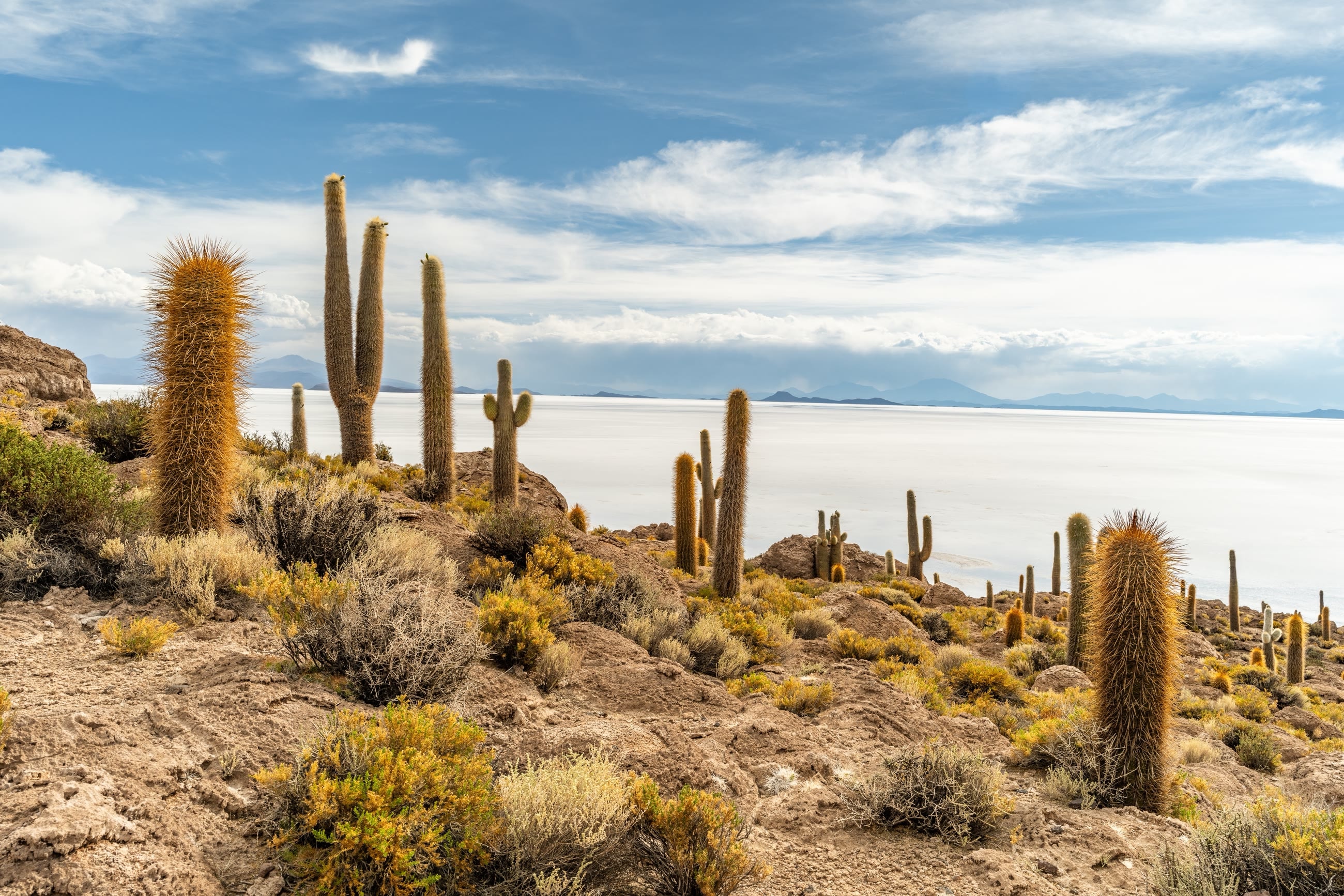
The Salar de Uyuni
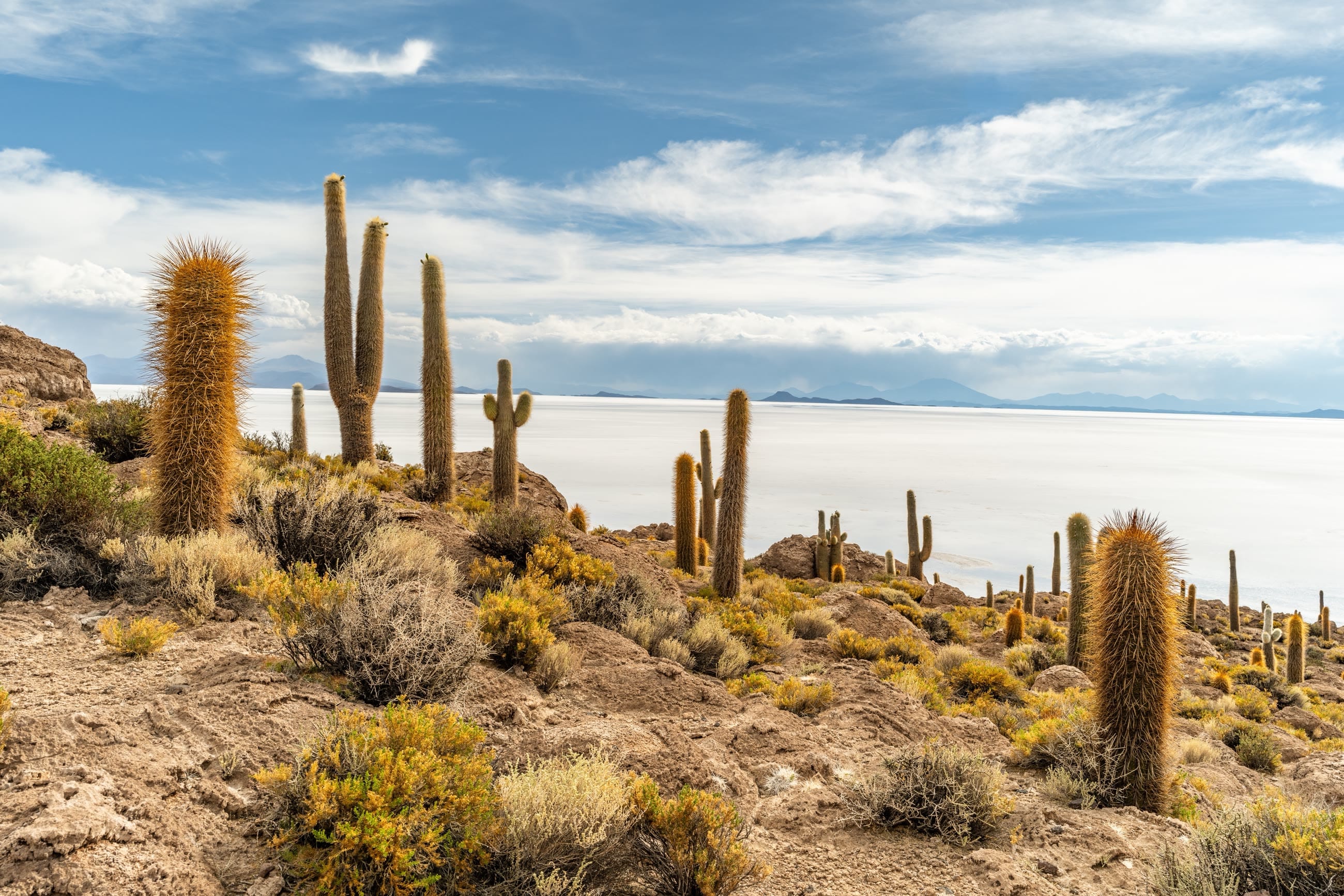
The largest salt flat in the world. After the rain, it becomes a perfect mirror of the sky. A landscape that defies belief.
The Altiplano & the lagoons
Laguna Colorada, Laguna Verde, the Sol de Mañana geysers: Martian landscapes dotted with pink flamingos.
La Paz & Sucre
La Paz, vertiginous in its canyon; Sucre, colonial and gentle. Two faces of urban Bolivia you shouldn't miss for anything.
The right season for Bolivia
May to October (dry season, clear skies, the altiplano at its best, cold nights). Avoid November-April (rain, muddy roads, poorer visibility at the lagoons). The best window? June-September.
The altiplano is harsh: nights drop to -5/-10°C at 4,000 m (even in the dry season). Days stay mild but the sun is fierce. Pack thick fleeces, sunglasses and SPF 50 sunscreen. Altitude sickness (soroche) is a real risk in the first few days.
The must-sees
Salar de Uyuni
The largest salt flat in the world. In the dry season, an endless white expanse; after the rains (January-February), a perfect mirror of the sky. A mind-bending landscape that justifies the trip all by itself.
Laguna Colorada & Laguna Verde
At 4,278 m, a blood-red lagoon coloured by algae (a hallucinatory sight), home to flocks of flamingos. Laguna Verde at 4,350 m rivals it. The ultimate road trip via the Sol de Mañana geysers.
La Paz
An administrative capital suspended in a dizzying canyon, the highest capital in the world (3,650 m). Rainbow-coloured cable cars, the Witches' Market (llama jaws, animal fetuses), a chaotic, vibrant urban style.
Sucre
A peaceful white colonial city, UNESCO-listed. Cradle of Bolivian independence and the judicial capital, with a gentle atmosphere after the intensity of La Paz. Perfect for acclimatising first.
Sol de Mañana geysers
Steaming geysers at 4,854 m. Underground hot springs, pungent sulphur, a Martian landscape. Combine with the road to Laguna Colorada: one of South America's rawest experiences.
Valley of the Moon (near Uyuni)
Multicoloured rock formations sculpted by erosion, spectacular sunsets. Short but intense, perfect as a full day combined with the Salar.
Local flavours to try
- Salteñas (little pastries stuffed with chicken or beef, eaten mid-morning around 10:30, juice running everywhere): Bolivia's signature sweet-savoury flavour
- Quinoa & Andean vegetables (black potatoes, giant corn, broad beans): a 5,000-year-old tradition
- Anticuchos (marinated skewers of grilled meat) + llajua (spicy tomato salsa): Peruvian-Bolivian street food fusion
- Bolivian-style ceviche (raw fish cured in lime, less famous than Peru's but every bit as intense)
- Charque (dried, salted alpaca or llama meat) or trucha (trout) from the Andean lakes: lean meats, unique flavours
- Api (a hot drink made from purple corn and cinnamon) + sweet corn bread: a comforting Andean breakfast
Practical tips
- Altitude: work your way up gradually via Sucre or La Paz. Sleep 1-2 nights in Sucre (2,790 m) before Uyuni (3,656 m). To acclimatise: water, coca leaves to chew, hot mate. Soroche (altitude sickness) strikes fast.
- A 4x4 is mandatory for the Salar + lagoons. Guides + driver + mixed groups: 3-4 days minimum. Unmarked tracks at 4,000+ m, a guide is essential.
- Water: do not drink the tap water. Sealed bottles only. Altitude + fizzy water = risk of digestive trouble.
- Money: few ATMs in Uyuni, even fewer near the lagoons. Take bolivianos in cash from La Paz or Sucre. USD accepted but at a worse rate.
- French-speaking guides are rare: most speak English or Spanish. Reputable agencies in Uyuni: Flamingo Tours, Desert Adventure, Anapqui.
- Light & photos: shoot at dawn and sunset; the dry altiplano sky makes for dream shots. Bring a spare battery (cold drains batteries fast).
Frequently asked questions · Bolivia
Is it dangerous for a solo woman or an inexperienced couple?
No more than Chilean Patagonia or Peru. The tourist corridor (Uyuni-Sucre) is safe. In La Paz: avoid wandering at night; the busy streets are fine by day. Guides and tour agencies are reliable. Plenty of solo travellers come here.
How many days minimum so you won't regret it?
10-12 days minimum: 1-2 days in Sucre (acclimatisation) + 3-4 days on the Uyuni/Salar/lagoons circuit + 2 days in La Paz + some buffer. Doable in 8 days but suffocating. To really explore (more Andean villages): 14-16 days.
When is the best time to photograph the Salar as a mirror?
January-February after the rains, with clear, cloudless nights. But the wet season means muddy roads and unpredictable rain. For photographers: July-September is the best compromise (dry, pure skies, no mirror but razor-sharp landscapes).
Can you do it from Peru or Chile?
Yes: tours run from Arequipa (Peru) or San Pedro de Atacama (Chile) to Uyuni. But that's 12+ hours by bus each way. Better to base yourself in Bolivia (La Paz) for a decent pace and proper acclimatisation.
What's a realistic all-in budget for 10 days from Luxembourg?
Flight from LUX ≈ €1,200-1,500 per person. On the ground: €350-650 (€35-65/day x 10 days). A 4-day Uyuni tour ≈ €300-500 (guide, transport, meals, lodge). Total: €2,000-2,700 per person.
Bolivia isn't for everyone. But if it's calling you, we know how to get you there.
Browse a sample handbook