
Chile
Chile
Lunar deserts and Patagonia
Chile is a straight line from the driest desert on earth to the glaciers of Patagonia. 4,300 km of absolute contrasts, between smoking volcanoes, little-known vineyards and icy fjords. A country built for adventure.
At a glance
Exchange rates and flight times are approximate.
Why Chile
Atacama
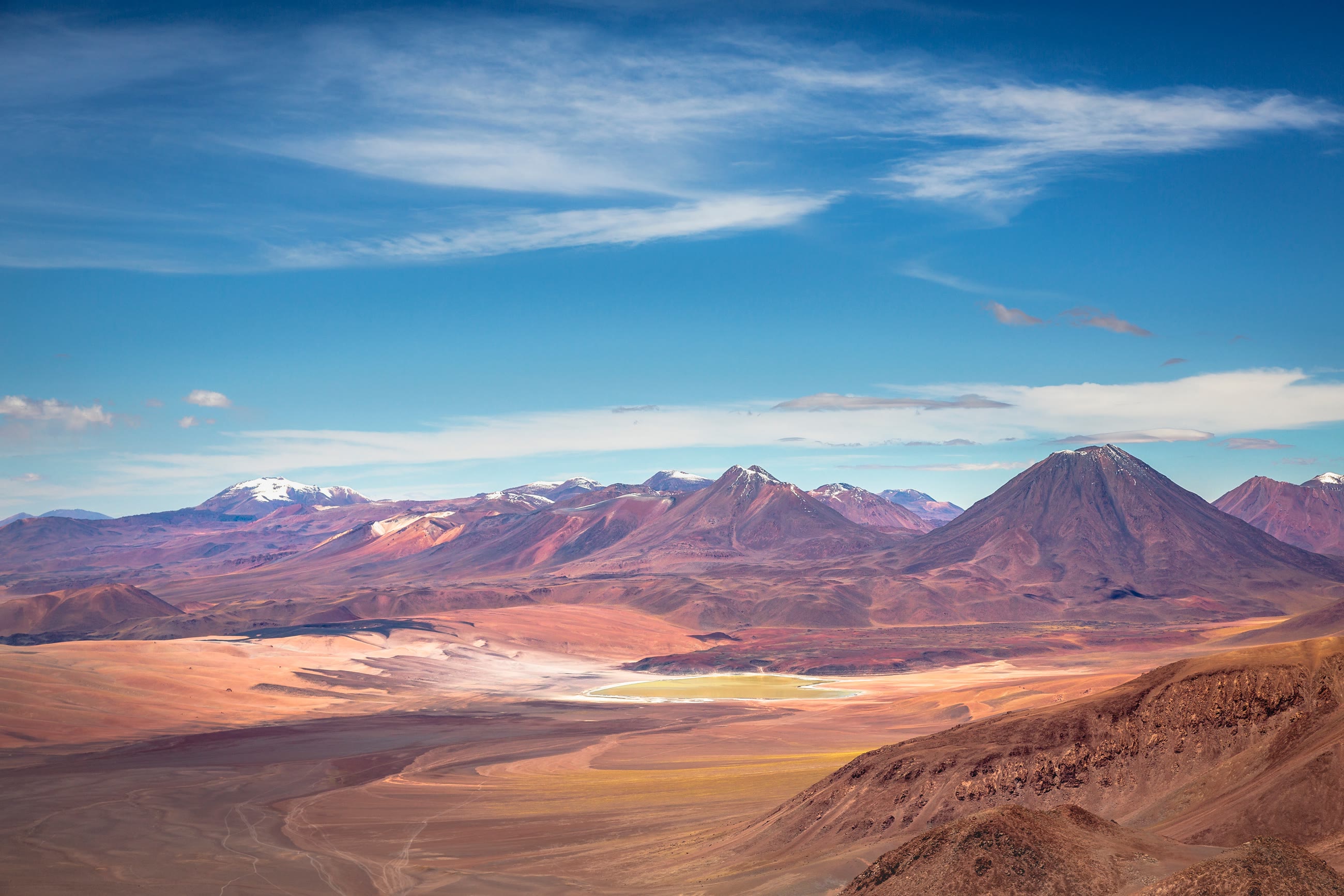
The driest desert on the planet. Moon Valley, the Tatio geysers at dawn, and some of the purest starry skies in the world.
Chilean Patagonia
The Carretera Austral, glaciers plunging into turquoise lakes, roads where you don't meet a soul. The true end of the world.
Valparaíso and the vineyards
Colorful Valpo, with its street-art stairways and bohemian cerros. And right next door, the wine valleys of Casablanca and Colchagua.
The right season for Chile
November to March (austral summer) for Patagonia: perfect conditions, little rain, temperatures of 10-18°C. The Atacama works year-round, though April to October brings less wind. Avoid July-August in Patagonia (winter, biting cold, some access routes closed).
Hugely varied climate: the ultra-arid Atacama (almost no rainfall), a temperate centre (Santiago), a cold and windswept Patagonia. Pack layers, sunscreen for the Atacama, and a rain jacket for Patagonia even in summer.
The must-sees
Torres del Paine
Three granite towers rising roughly 2,500 to 2,850 m in Torres del Paine National Park, in Patagonia. Classic hikes (the W Trek), turquoise lakes, glaciers. Not to be missed.
Atacama · Valley of the Moon & El Tatio Geysers
A lunar desert around San Pedro, with multicoloured rock formations. Geysers at dawn at 4,300 m. The purest starry skies in the world.
Grey Glacier (Torres del Paine)
At the heart of Torres del Paine park, on the Chilean side. An active 5 km glacier you take in from walkways. Blocks of ice 60 m tall calve into the water on a regular basis.
Valparaíso · Monumental port city
A colourful coastal city: street-art staircases, bohemian cerros, sweeping views. A genuinely bohemian atmosphere, with seafood restaurants facing the ocean.
Carretera Austral
A 1,200 km unpaved scenic road through central Patagonia. Fjords, lakes, remote villages. The ultimate road trip, wild and adventurous.
Vineyards of central Chile
The Casablanca, Colchagua and Maipo valleys: some of the continent's most acclaimed wines (Carmenère, Cabernet Sauvignon). Tastings in historic bodegas with the Andes as a backdrop.
Local flavours to try
- Ceviche: raw fish marinated in lemon, coriander and red onion; fresh and found all along the Chilean coast.
- Pastel de choclo: a sweetcorn pie with egg, meat and cheese; a classic Chilean comfort dish
- Empanadas de pino: a turnover filled with minced meat, onion, hard-boiled egg, olives and raisins; an iconic Chilean speciality
- Seafood (locos, erizos, congrio): sea urchins, octopus, grilled fish at the Valparaíso market
- Chilean wines: internationally renowned Carmenère, Cabernet Sauvignon and Sauvignon Blanc, with tastings in bodegas
- Charqui (jerky): Andean-style dried meat, handy for treks in Patagonia
Practical tips
- Getting around: long-distance buses are comfortable and reliable (Turbus, BusNord). Fly domestically to the Atacama or Patagonia if time is short (≈ 3-4h Santiago → Calama).
- Money: the Chilean peso is strong and card payments are widely accepted. Fee-free ATM withdrawals. Tipping 5-10% in restaurants is optional.
- 4x4 excursions are non-negotiable: the Atacama and Patagonia require a guide plus a 4x4 (rentals from local agencies, ≈ 80-150 € / day).
- Water & altitude in the Atacama: drink constantly; soroche pills (sold in local pharmacies) or acetazolamide (Diamox, on medical advice) against altitude sickness (4,000+ m). Allow 1-2 days to acclimatise in San Pedro.
- Useful apps: Moovit (Santiago transport), offline maps for remote areas. Phone: local SIM (Entel, Claro, Movistar).
- Safety: tourist cities are safe. Avoid certain Santiago neighbourhoods at night. Patagonian roads are remote: fill the tank before setting off and carry spare water.
Frequently asked questions · Chile
Do you need 2-3 weeks, or is a shorter trip possible?
Chile deserves 12-18 days to do it justice (3-4 days in the Atacama + 5-7 in Patagonia + 2-3 for the wine valleys and the coast). A shorter trip works too: 8-10 days for Patagonia alone, or the Atacama + Santiago. Distances are long and the time difference is real, so it pays to make the most of it.
Atacama or Patagonia: which should you choose?
The Atacama means lunar desert, starry skies and geysers, accessible year-round with less physical effort. Patagonia means epic hikes, glaciers and raw wilderness, and it is seasonal (November-March is ideal). Two complementary worlds: if time allows, combining both makes for the richest experience.
When is the best time to go?
November to March (austral summer) for Patagonia, with stable weather at 10-18°C. The Atacama: year-round, though less windy April-October. Avoid July-August in Patagonia (winter, -5°C, snowbound or closed trails). Santiago and the vineyards: spring (September-October) or autumn (March-April) are ideal.
Do you have to hire guides for the Atacama and Patagonia?
Patagonia: YES, an organised trek or a local guide is recommended (registration is mandatory in Torres del Paine). The Atacama: 4x4 routes require a licensed guide for safety and site access. Budget accordingly: ≈ 80-150 €/day for guide plus transport.
What about Santiago? Is it worth it?
2-3 days in Santiago is ideal: museums, the bohemian Bellavista district, the San Cristóbal funicular, a solid market and food scene. The coast is 1h30 away (Valparaíso, Viña del Mar). Not the highlight of the trip, but a pleasant stop and a logical starting point.
Health risks, altitude, vaccinations?
No major risks in tourist areas. Atacama altitude (3,000-4,000 m): soroche is possible in the first days, so drink plenty and rest. Yellow fever recommended for the north (not mandatory). Good pharmacies and reliable doctors in Santiago and Valparaíso.
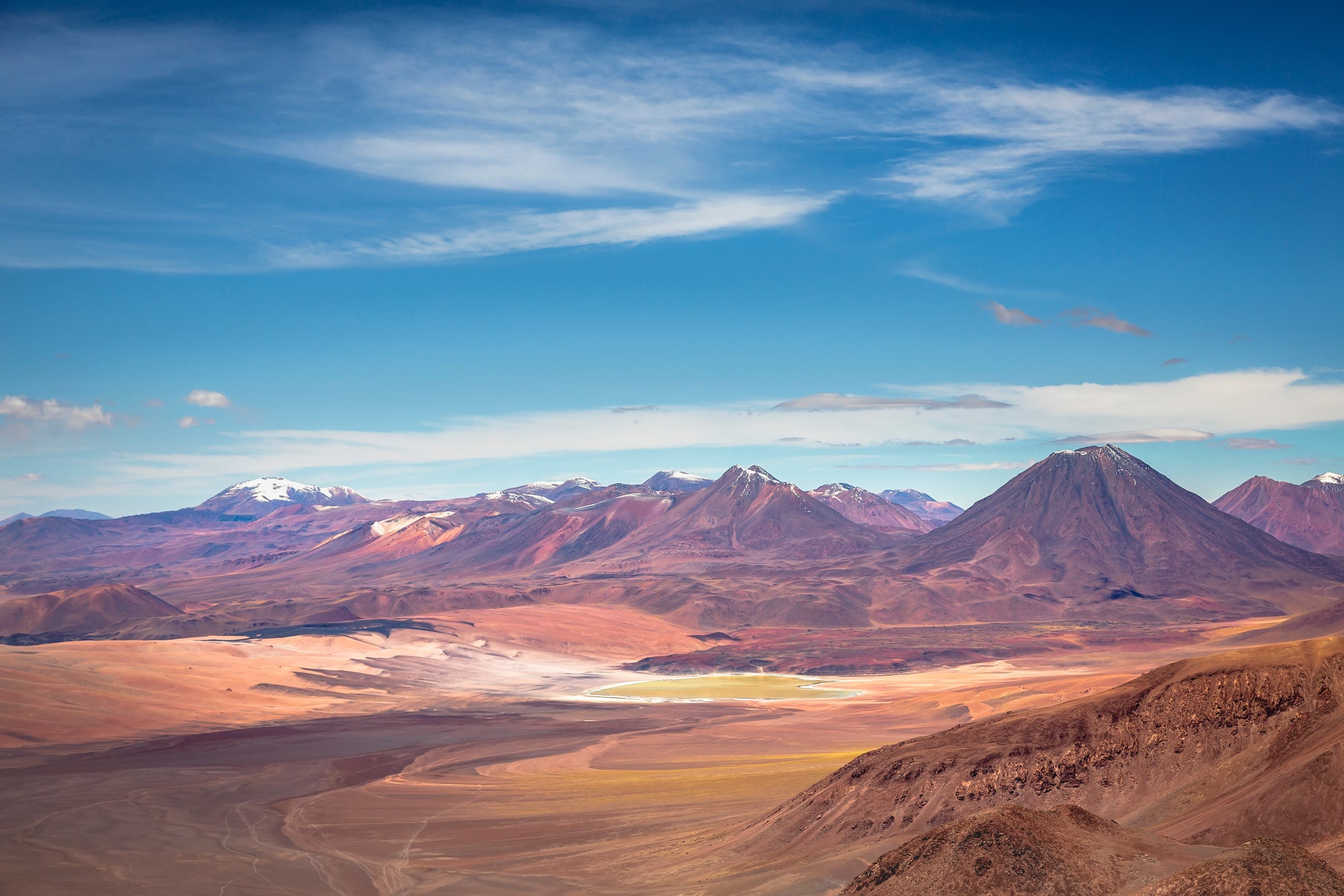
Chile is a journey of contrasts. From scorching desert to southern glaciers, we trace the thread that ties it all together.
Browse a sample handbook