
Egypt
Egypt
Millennia of history along the Nile
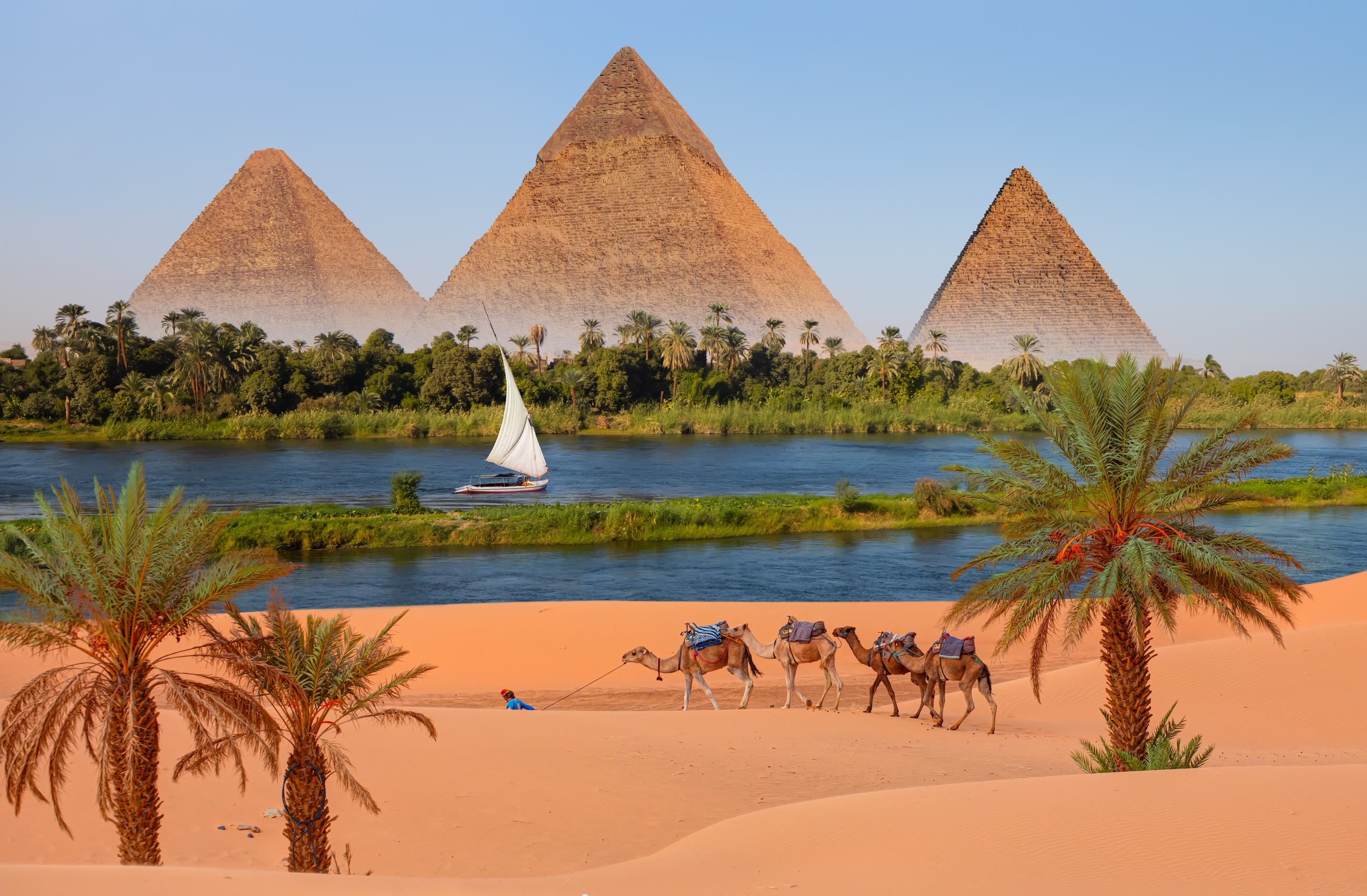
Egypt is the original journey, the one that fascinated the Greeks and the Romans long before us. Pyramids rising out of the desert, the Nile flowing as it did 5,000 years ago, and temples that make your head spin, not because of their height, but because of their age.
At a glance
Exchange rates and flight times are approximate.
Why Egypt
The pyramids & Cairo
Giza at sunrise, Saqqara without the crowds, the Cairo museum. Wonders of the world within arm's reach.
Cruising the Nile
From Luxor to Aswan, between the temples of Karnak, the Valley of the Kings and Nubian villages. The Nile is best experienced from the water.
Abu Simbel
Two colossal temples carved into the cliff by Ramses II. Far from everything, on the shores of Lake Nasser. A visual shock like no other.
The right season for Egypt
October to April (mild winter: 20–25°C, very little rain). Avoid May–September (crushing heat of 35–45°C, humidity on the coast). December–January: peak tourist season, book early. March–April: an excellent compromise.
Desert climate: little rain (Cairo: virtually none). Cold temperatures at sunrise (Nile cruise); hot from 9am onwards. Pack: a hat, SPF 50+ sunscreen, light layers (big day/night swings). Sandstorms (khamsin) possible March–May.
The must-sees
The Pyramids of Giza & the Sphinx
Khufu, Khafre and Menkaure at sunrise, without the afternoon crowds. The Sphinx slowly emerges from the haze. Unmissable, even for the sceptics.
Nile cruise: Luxor → Aswan
Sailing past Karnak, the Valley of the Kings, Esna, Edfu, Kom Ombo. The Nile is best lived from a boat deck, glass of Egyptian white wine in hand at sunset.
Abu Simbel
Two colossal temples of Ramses II carved into the cliff face on the shore of Lake Nasser. 280 km from Aswan. Not reachable by car; a charter flight or boat is required. Majestic, remote, unforgettable.
The Egyptian Museum in Cairo (the old building)
Pharaonic mummies, golden sarcophagi, statues of Khufu. Dusty, crowded halls, but the real thing. The new National Museum of Egyptian Civilization (NMEC), in Fustat (Old Cairo), now houses the royal mummies in a more spacious, modern setting; the Grand Egyptian Museum (GEM), near Giza, showcases the treasures of Tutankhamun.
Saqqara & Memphis
The Step Pyramid of Djoser (the oldest stone structure in the world). A far less touristy site than Giza. Just 25 km from Cairo, easily done in half a day.
Valley of the Kings & Luxor Temple
Royal tombs cut into the mountainside (Tutankhamun, Ramses II). Karnak Temple, one of the largest temples of ancient Egypt. Luxor is the ideal base for exploring the west bank of the Nile.
Local flavours to try
- Ful medames: a warm fava-bean purée topped with a soft-boiled egg, lemon and pita bread. The nation's breakfast, eaten with the family.
- Koshari: noodles, rice, lentils, tomato sauce, fried onions. Popular street food with an irresistible tangy flavour.
- Stuffed pigeon (Hamam mahshi): squab stuffed with rice and liver, grilled over a wood fire. A Cairo specialty, found in family homes or upscale restaurants.
- Egyptian mezze: baba ganoush, hummus, cheese pastries, beetroot salad. A rich spread made for sharing.
- Wholegrain rice with seafood & moussaka: in Alexandria's coastal restaurants (grilled sea bream). Pair it with aish (traditional bread).
- Baklava & konafa: pastries of honey, walnuts and pistachio. Enjoyed at the café with mint tea or a sweet karkade.
Practical tips
- Book your Nile cruise well ahead (Oct–Dec): capacity is limited, prices climb fast. Negotiate directly with the boats (often cheaper than through an agency).
- Water: drink only purchased bottled water (EGP 2 a bottle). Don't drink tap water (risk of traveller's stomach). Ask for sealed bottles in restaurants.
- Local guides: essential at the sites (Karnak, Valley of the Kings). Vivid storytelling, historical anecdotes, shortcuts to dodge the crowds. Budget: €15–25 / person / day.
- Power sockets: two-pin plugs (the Egyptian standard). Adapter required. 220V voltage.
- Currency: withdraw EUR or CHF at Cairo ATMs; the exchange rate is worse than in Europe. Pay directly in EGP (haggling possible). No compulsory tipping, but 10–15% is appreciated in restaurants.
- Safety: tourist areas are safe (Giza, the Nile, Luxor). Avoid North Sinai and the Nile valley outside the tourist circuits. Local police keep a watchful eye around the sites.
Frequently asked questions · Egypt
What's the ideal length of trip?
8 days minimum (2 days in Cairo + a 5–6 day cruise) for a first trip. 12–14 days is ideal if you add Abu Simbel, Alexandria or more time in Luxor. Allow at least one buffer night in Cairo for the dense traffic and the visits (pyramids + museum).
Should you worry about safety in Egypt?
The tourist areas (central Cairo, the cruises, Luxor, Aswan) are safe and well supervised. Avoid moving around alone at night, travel in a group or with a guide. Check your foreign ministry's travel advice before departure.
How much does a Nile cruise cost?
5 days Luxor-Aswan: €150–250 / night on a 3–4 star boat (small and intimate) or €80–120 on a simple floating guesthouse. All-inclusive (meals, excursions) costs more: €200–350/night. Prices drop in May–Sept (the heat).
Can you visit Egypt solo or as a couple?
Yes, easily. The circuits are well established, guides are everywhere, unescorted couples are welcome. Solo travel is safe too, except perhaps for a woman travelling alone (some persistent behaviour can still occur; stay low-key and alert). Travelling with a group or a guide adds real comfort.
What to pack? Climate? Dress code?
Light clothing, a hat, sunglasses, SPF 50+ sunscreen. Long dresses/trousers (cultural respect, sun protection). Comfortable shoes (lots of walking at the archaeological sites). A jumper/cardigan (interiors are air-conditioned to freezing). Swimwear. A power adapter.
Do you need to speak Arabic to travel there?
No. English is spoken in hotels, tourist restaurants and among guides. Zero Arabic required. A few words (shukran = thank you, merhaba = hello) are appreciated. A mobile translator (Google Translate) is useful for haggling or reading signs.
Egypt is the trip you take once and never forget. We plan it for you, the right way.
Browse a sample handbook