
Madagascar
Madagascar
Baobabs, biodiversity and lagoons
Madagascar is a world of its own. An island continent where 80% of the wildlife exists nowhere else, where giant baobabs draw impossible silhouettes against the sky, and where the beaches of the north rival the Maldives, without the prices and without the crowds.
At a glance
Exchange rates and flight times are approximate.
Why Madagascar
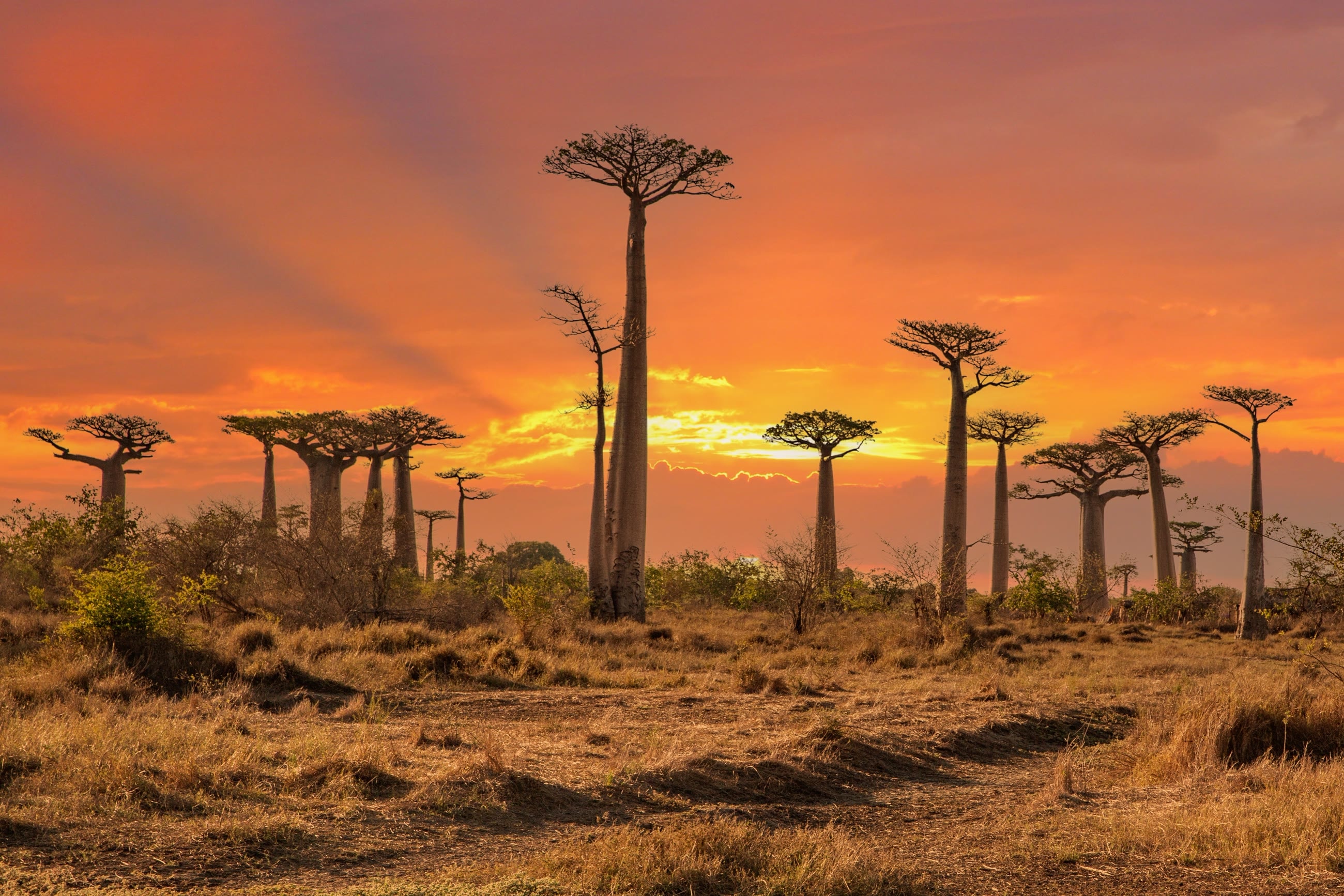
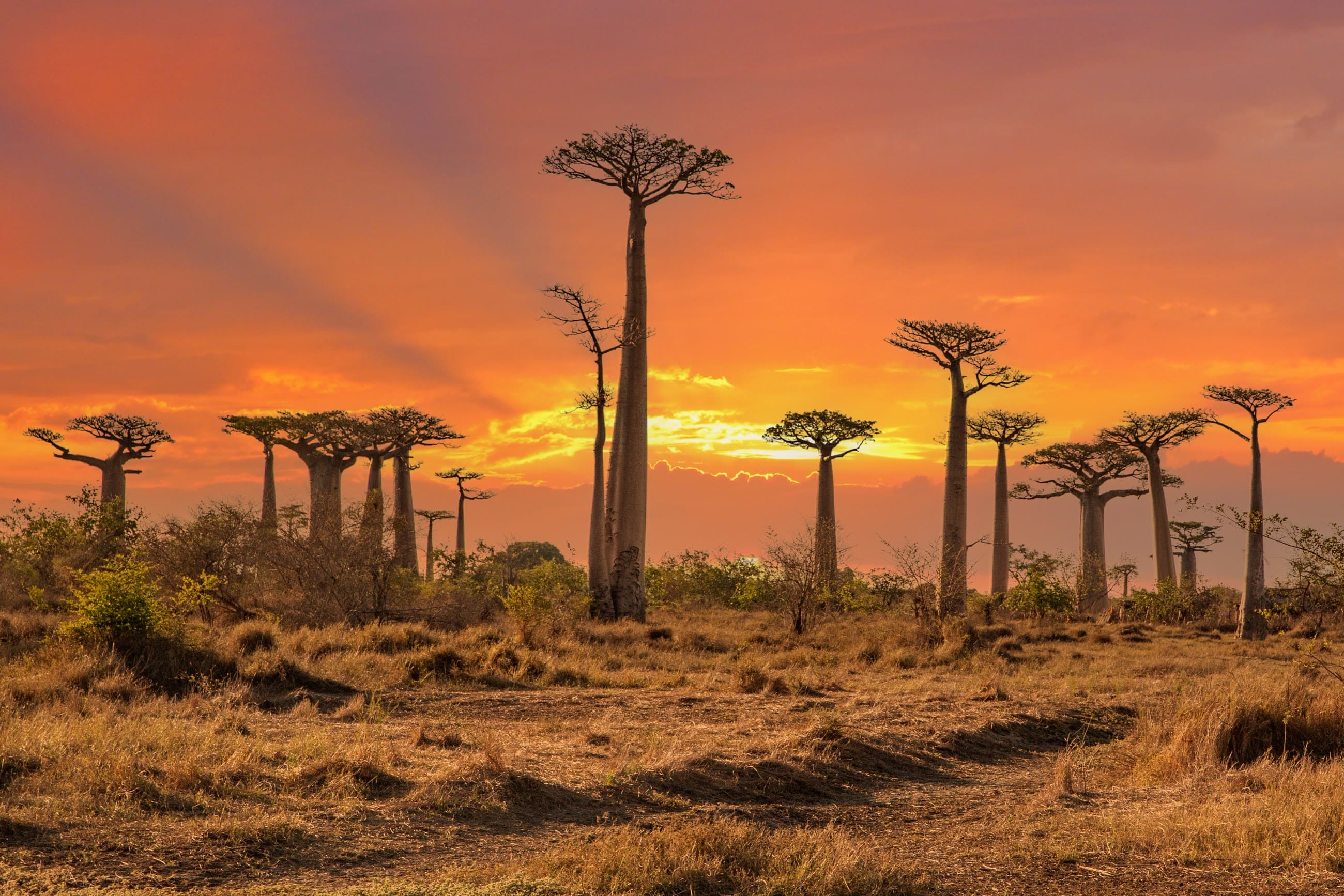
The Avenue of the Baobabs
Thousand-year-old trees lined up at sunset. Madagascar's most iconic image, and it's even more beautiful in real life.
The Tsingy & the wildlife
Cathedrals of razor-sharp stone, lemurs leaping from tree to tree, tiny chameleons. Nature's own laboratory.
Nosy Be & the islands
Turquoise waters, swimming with whale sharks, lazy days on white-sand beaches. Tropical paradise, Malagasy style.
The right season for Madagascar
April to November is ideal. Avoid November-March (rainy season, cyclone risk). May-September: cooler air, clear skies, visible wildlife. April and October: mild temperatures, less touristy than the European summer.
Tropical on the northern and eastern coasts, temperate on the highlands (15-25°C in Tana). Pack rain gear for the wet season. Rough roads = long journeys, so allow plenty of time.
The must-sees
The Avenue of the Baobabs (Menabe)
The road between Morondava and Belon'i Tsiribihina (Menabe region): thousand-year-old giants at sunset. A 15-minute drive from Morondava, reachable by jeep, not to be missed.
Tsingy de Bemaraha Park
A forest of razor-sharp limestone, geological labyrinths found nowhere else on Earth. Lemurs, chameleons, spectacular hikes. Demanding to reach (4x4, 3-4 days min), immensely rewarding.
Andasibe-Mantadia
Humid primary forest, the iconic indri lemurs, rare birds. Just 2.5h from Tana, an ideal weekend escape, well set up for travellers.
Nosy Be & neighbouring islands
Turquoise waters, whale sharks (seasonal), diving, lazy beach days. A touristy island but genuinely beautiful, and the base for exploring the northern archipelago.
Pangalanes Canal
Natural red channels carved through the primary forest. An enchanting boat ride, less visited than the Tsingy and wonderfully authentic.
Île Sainte-Marie
White beaches, mangroves, coastal villages, less developed than Nosy Be. Reached by air from Tana or by ferry from Soanierana-Ivongo (near Toamasina) on the east coast; relaxation guaranteed.
Local flavours to try
- Romazava (zebu stew with leafy greens, including the mildly tingling brède mafana): the flavourful, authentic national dish
- Grilled zebu: tender meat, found everywhere in the south and the bush
- Vary amin'anana (rice with greens and meat): a comforting everyday dish, served everywhere
- Pineapple (exotic varieties) and mangoes: the island's sweet, juicy fruit
- Grilled coastal fish: the day's catch at Nosy Be and along the north coast, excellent
- Ravitoto (cassava leaves in coconut sauce): comforting, a true family recipe
Practical tips
- Rent a 4x4 with a guide/driver (€150–250 / day): rough roads, next to no signage, and a guide enriches the wildlife and cultural experience. Don't drive around on your own.
- Domestic flights are recommended (Tana → Morondava → Antalaha) to save 30–40% of your time and energy. Airlines: Madagascar Airlines / Tsaradia (domestic network), Ewa Air.
- Cash: ATMs are rare in the bush. Exchange EUR for MGA in Tana for the best rate. Visa/MC cards accepted at luxury hotels only.
- Health: basic pharmacies in Tana and coastal towns. Local hospitals are rudimentary = repatriation insurance and a personal medical kit (antibiotics, antimalarials) are essential.
- Electricity: 220 V / 50 Hz, type C and E sockets (same as Luxembourg, no adapter needed). Power cuts are frequent = a head torch is useful. Charge your phone at the hotel.
- Tipping: welcome but not compulsory. 5–10% in restaurants, €2–5 for guides and drivers is appreciated. Some people decline small change offered in the street (never give money to children).
Frequently asked questions · Madagascar
Do you need a visa for Madagascar?
For Luxembourg citizens: visa-free for stays of up to 90 days. A passport valid for 6 months is mandatory. No visa on arrival to apply for, but customs may ask questions: be ready to show proof of funds and your length of stay (hotel bookings are enough).
How do you get around Madagascar? Are the roads passable?
National roads are decent, secondary roads are very rough = domestic flights or a 4x4 are recommended. Allow 6–10h on the road for 400 km. Renting with a guide/driver is safer and more enjoyable than going it alone.
What budget should you plan for wildlife and the parks?
Park entrance fees (Tsingy, Andasibe): €20–40. Mandatory guides: €15–25 / day. Diving trips at Nosy Be: €50–80. All in, plan €500–1,200 for 10 days of activities.
Is Madagascar safe for travellers?
Generally safe with basic caution. Avoid the poorer districts of Tana at night. Road checkpoints may ask for papers, so keep your passport with you. Malaria is present in all low-altitude coastal areas (east, west, north and south); the risk is lower on the highlands (Tana): antimalarials recommended. Health facilities are limited: solid repatriation insurance is essential.
How do you eat in Madagascar without getting sick?
Avoid tap water except treated water in Tana. Stick to mineral water. Tourist restaurants are reliable. Street food: hot cooked meats and dry rice are OK, fruit peeled by you. Get vaccinated (hepatitis A, typhoid) before you leave.
What's the best month to see whales or whale sharks?
Whale sharks (Nosy Be): October-November. Humpback whales (west coast): July-September. Best balance of wildlife + weather: May-September.
Madagascar is a demanding trip, but the reward matches the effort. We prepare every step for you.
Browse a sample handbook