
Namibia
Namibia
Vast deserts and an end-of-the-world feel
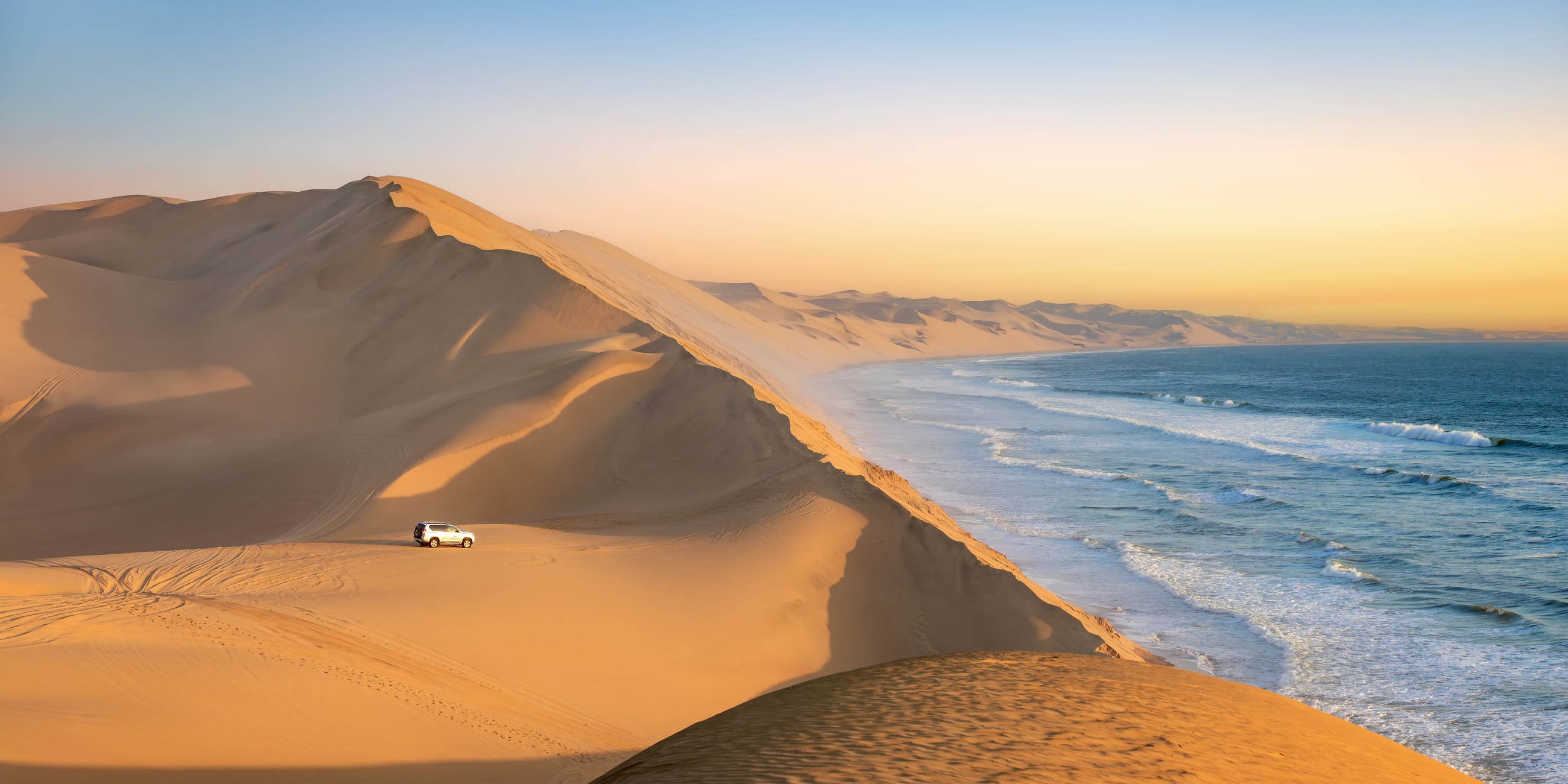
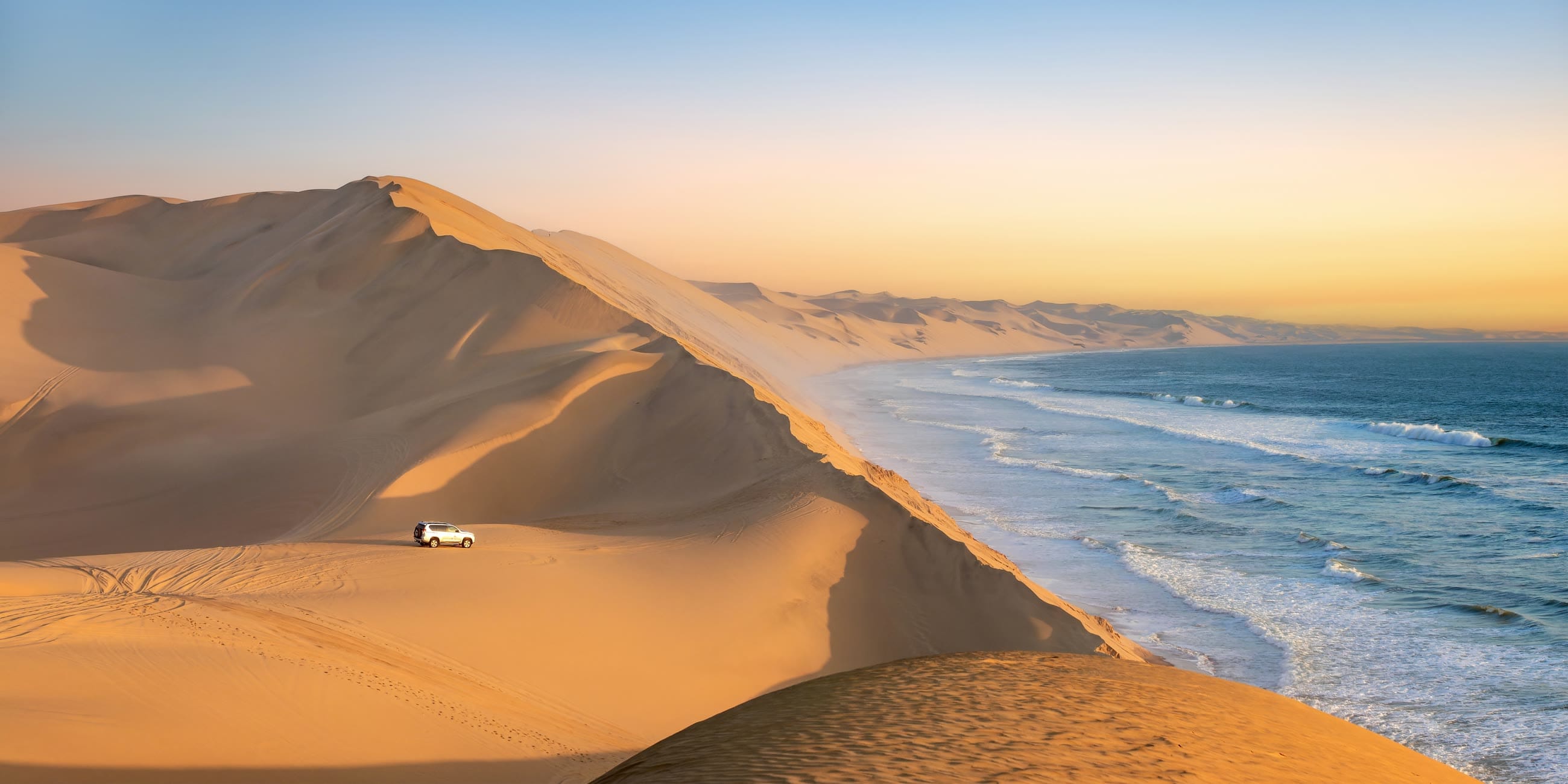
Namibia is a monumental silence. The highest red dunes on Earth, lunar landscapes where nothing grows, desert elephants, and a night sky so pure it overwhelms you with beauty. This is Africa in its rawest form, unfiltered and uncompromising.
At a glance
Exchange rates and flight times are approximate.
Why Namibia
Sossusvlei & Deadvlei
Dunes 300 m tall and trees dead for some 600 to 700 years standing in a pan of white clay. The most photogenic scenery in Africa.
Etosha & the wildlife
A vast white salt pan ringed by waterholes. Lions, elephants, rhinos, all self-drive, at your own pace.
The Skeleton Coast
Shipwrecks scattered along a fog-battered shore. An end-of-the-world landscape, fascinating and melancholy.
The right season for Namibia
May to October (dry season). Best months: July-September for wildlife and crystal-clear night skies. Avoid: December to February (heat, sporadic wet season) and November (a hot, unpredictable transition month).
Semi-arid to desert climate. Warm days (25-30°C May-Oct), cool nights (5-15°C). Very little rainfall. Pack high-SPF sunscreen, light clothing and a warm layer for the evenings. Water is precious, so bring a reusable bottle.
The must-sees
Sossusvlei & Deadvlei
Blood-red dunes 300 m high and, at Deadvlei, acacia trees that died 600 to 700 years ago (the trees themselves were around 900 years old), frozen in a white clay pan. An unforgettable sunrise over the Namib Desert.
Etosha Pan
A vast white dried-out lake ringed by waterholes. Wildlife watching like nowhere else: lions, elephants and rhinos on a self-drive at your own pace.
Skeleton Coast
A wild coastline dotted with rusting shipwrecks, wrapped in permanent coastal fog. An apocalyptic backdrop and raw beauty that captures the essence of Namibia.
Swakopmund & Walvis Bay
Small German-flavoured seaside towns with a retro feel. The base for coastal excursions and watching dolphins and fur seals.
Damaraland & Spitzkoppe
Red mountains, dizzying rock formations, ancient San rock art. A scenic road trip towards the desert.
Namibia's Night Sky
Almost zero light pollution. The Milky Way in 3D, exceptional stargazing, a spiritual experience at Sesriem or from a lodge.
Local flavours to try
- Spiced grilled kudu: tender desert game with a delicate flavour, served with a tamarind-berry sauce.
- Droëwors: Namibia's dried sausage, the perfect road-trip snack or a hearty aperitif.
- Potjiekos: a communal stew (meat, root vegetables) cooked outdoors, a bushveld tradition.
- Pap and morogo: white maize porridge with seasonal leafy greens, authentic local comfort food.
- Fresh coastal fish (snook, snoek): simply grilled in Swakopmund, tasting of sea air.
- Mopane worms (onyena): protein-rich insects, grilled or in sauce, with a subtle nutty taste, the desert's protein.
Practical tips
- Self-driving is essential: rent a sturdy 4x4 (Hilux, Land Cruiser). Long roads but in good condition; fuel at the main stations. Fuel budget: €80-150 for 2,000 km.
- Distances deceive: Namibia is vast, journeys are long (Windhoek-Sesriem: around 350 km, then 65 km to Sossusvlei, 4.5-5h on the road, largely on gravel). Plan strategically spaced lodges and don't overdo the daily mileage.
- Water & supplies: small towns are far apart, everything can be a long way off. Fill your fuel tank and stock up on water when leaving Windhoek. Apps: offline Maps.me is a must.
- Road safety: driving is on the other side (the left), keep speeds down on gravel roads. Night falls around 5-6pm in winter (May-Sept): finish driving before dark.
- Wildlife at night: not to be feared, not to be fed. Give elephants a wide berth (100+ m). Walking on foot during a self-drive: possible, but in a group and before dusk.
- Money & tipping: NAD everywhere except tourist hubs (EUR/USD accepted). Tips of 10-15% in restaurants and for guides. Inexpensive once you're there.
Frequently asked questions · Namibia
Do you need to rent a 4x4? Can I manage with a normal car?
A 4x4 is strongly recommended for Etosha, Damaraland and gravel roads. Main roads (Windhoek-Swakopmund) are fine in a saloon car, but a 4x4 is essential for 80% of the trip, and for the real adventure.
Is Namibia dangerous?
Very safe for alert travellers: no notable urban crime problem, visible police presence, reliable hotels and lodges. Even self-drives in Etosha are secure. Take the usual urban precautions (Windhoek at night), but it's far less of an issue than South Africa.
What's the ideal length for a trip to Namibia?
10-14 days minimum to explore Sossusvlei, Etosha, the coast and Damaraland without rushing. Allow 2-3 days per area; the distances stretch the itinerary. Under 10 days: focus on Sossusvlei + Etosha only.
Are there luxury hotels, or is it camping only?
An excellent range: 5-star lodges in the middle of nowhere (Mowani Manor, Jack's Camp), comfortable mid-range lodges (Sossusvlei Lodge), and camping (cheaper, more adventurous). At the premium end, Skeleton Coast Lodge takes it to the extreme.
Do you need vaccinations or antimalarials?
Not mandatory for EU citizens. Malaria is present in low-lying areas (Etosha, the Kunene valley): consult your doctor. Up-to-date yellow fever and diphtheria vaccinations are recommended. First-aid kit: antimalarials, anti-diarrhoea medication, SPF50+ sunscreen.
When is the best time to see the wildlife?
July-September: waterholes shrink, animals gather in Etosha, the night sky is pristine. May-June: less spectacular but cheaper. Avoid summer (December-February): scattered waterholes, extreme heat, roads impassable after rain.
Namibia is the trip that puts everything back into perspective. Vast, empty, essential. We map out the route for you.
Browse a sample handbook