
Norway
Norway
Fjords and wide-open spaces
Norway pushes the limits of what nature can offer. Fjords so deep they seem unreal, roads clinging to cliffs above the Atlantic, and that vast, restorative silence you won't find anywhere else.
At a glance
Exchange rates and flight times are approximate.
Why Norway
The legendary fjords
Geirangerfjord, Nærøyfjord, Sognefjord: mirror-still waters between 1,000 m walls. By kayak, by ferry or from the road.
The Lofoten Islands
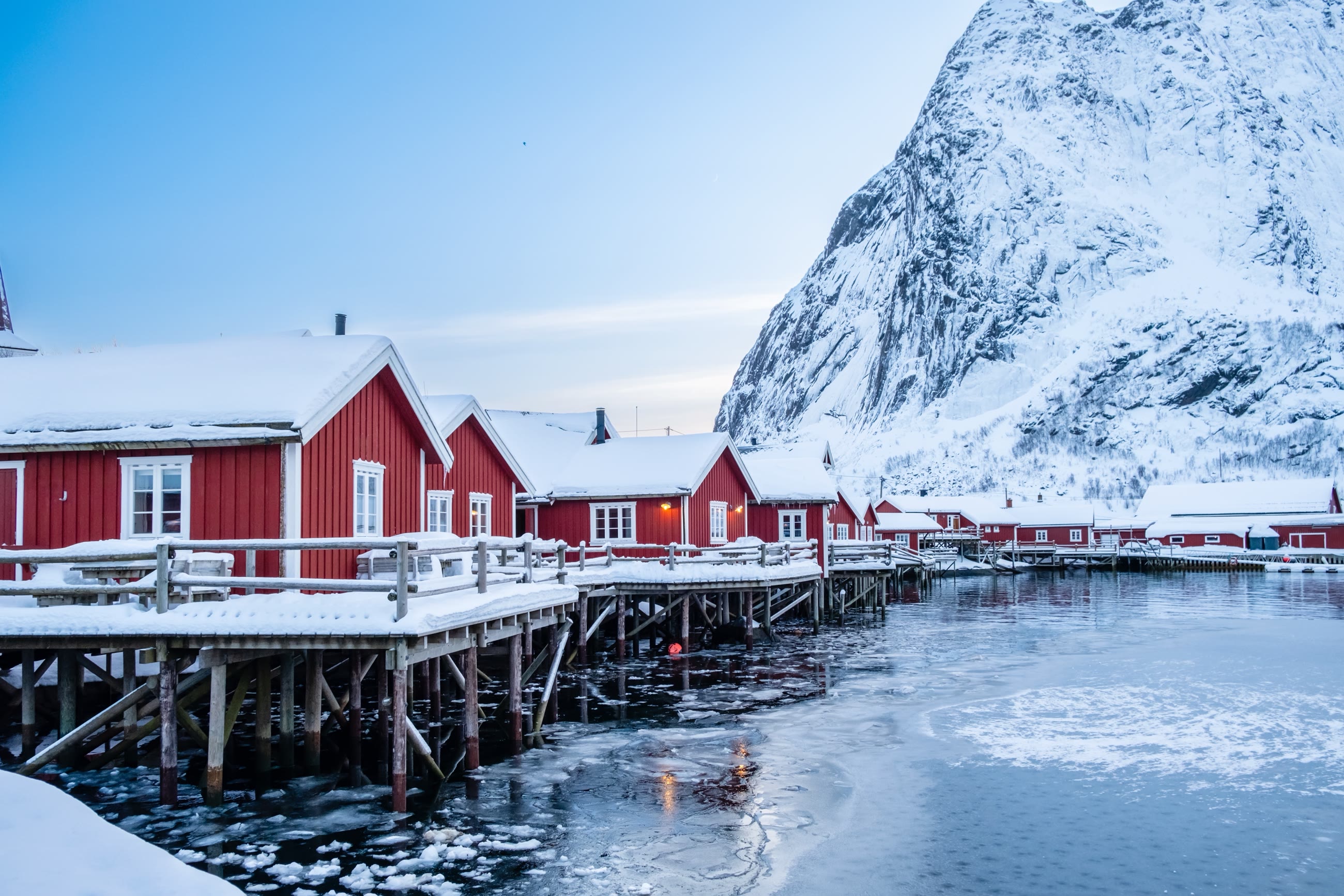
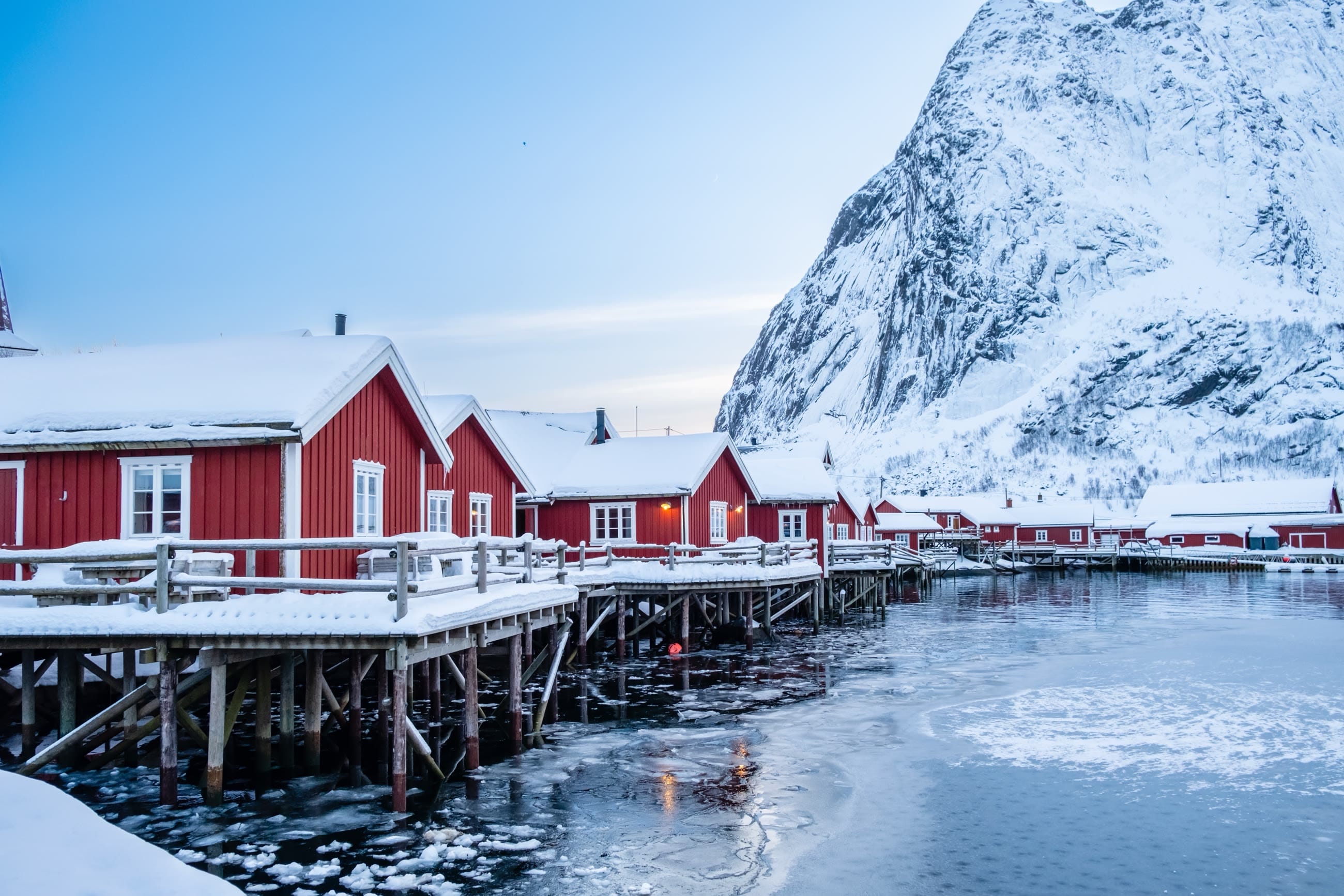
Red fishing villages perched on granite islands. One of the few places where the red of the houses stands out so sharply against the granite and the sea.
Iconic hikes
Trolltunga, Preikestolen, Reinebringen: summits you can reach on foot, opening onto the fjords and the Atlantic.
The right season for Norway
June to August for the bright Nordic summer and hiking (15-25°C, 24-hour daylight). January to March for the northern lights (-5 to -15°C, clear skies). Avoid: mid-September to November (grey, rainy autumn) and December (dark and expensive)
Oceanic to subarctic climate depending on latitude. West coast: mild and rainy. Inland and up north: long, cold winters and short summers. Pack multiple layers, a rain jacket and solid hiking shoes.
The must-sees
Geirangerfjord
Norway's most beautiful fjord: turquoise water, waterfalls bursting straight out of the cliffs, best taken in by kayak or on a cruise in July.
Lofoten Islands
Red fishermen's cabins set against granite peaks. A spectacular coastal road, northern lights in winter, midnight sun in summer.
Preikestolen (Pulpit Rock)
A 2-hour hike from Stavanger to a rock ledge 604 m above the Lysefjord. Dizzying views, not to be missed.
Sognefjord & Flåm
Europe's longest fjord. The Flåm railway threads between mountains and waterfalls, plus cruises and postcard villages. An epic road trip.
Oslo
The Nordic capital: the Munch Museum, a futuristic opera house, the bohemian Grünerløkka district, design-led cafés. An ideal starting base.
Northern lights (Tromsø and further north)
January to March, from Tromsø or the North Cape. Magical but fickle: plan 3-4 nights to maximise your chances.
Local flavours to try
- Smoked or fresh salmon (Norwegian salmon): on every menu, rarely disappointing
- Fiskeboller (fish dumplings in cream sauce): a signature dish served everywhere
- Klippfisk (salted, dried cod): a coastal tradition with an intensely salty flavour
- Fish soup (fiskesuppe): rich, generous, perfect after a hike
- Skillingsboller (cinnamon buns): the iconic pastry of Norwegian cafés
- Brunost (caramelised brown cheese): one of a kind, slightly sweet, best on crusty local bread
Practical tips
- Getting around: a rail pass (Vy, formerly NSB) pays off, or rent a car for the fjords: petrol is pricey (€1.85-2.00/L) but the roads are immaculate.
- Money: Norway is nearly cashless, cards are accepted everywhere. Cash is rarely useful except in small mountain cafés.
- Accommodation: book early for summer (hotels are expensive). DNT mountain cabins offer great value for money. Camping is affordable.
- Hiking: trails are well marked and safe. Trolltunga, Preikestolen and Reinebringen are classics but packed between 10am and 2pm: start early.
- Safety: a very safe country, single emergency number 112. Swimming in the fjords: the water is icy even in July, a wetsuit is recommended.
- Useful apps: Maps.me (offline maps), Yr (ultra-accurate Norwegian weather), FindMyBus (long-distance coaches).
Frequently asked questions · Norway
How much time do you need to 'do' Norway?
10-14 days minimum for fjords plus northern lights, or 2 weeks to cover both north and south. 8 days is tight (Oslo + one fjord). 3 weeks is ideal to savour it all.
Where's the best place to see the northern lights?
Tromsø (68°N, more urban, 3-4 nights). Beyond the Arctic Circle you get more dark nights but mountain roads too. Plan at least 3-4 attempts, the lights are fickle.
Is it really as expensive as people say?
Yes, but less so if you cook for yourself (Airbnb with a kitchen), sleep in DNT mountain cabins (€30-50/night), skip the tourist restaurants and stay outside the cities. On a tight budget, €100/day is doable. For comfort: €180/day.
Do you need a 4x4 for the mountain roads?
No, a normal car handles the paved roads (the vast majority). A 4x4 helps in the far north of Lofoten or on high gravel tracks (July-October only). In winter, studded tyres are mandatory and chains are needed on the passes.
Public holidays or closing days in Norway?
Museums are often closed on Mondays. 17 May (Constitution Day) is a public holiday, shops are closed. Many shops and museums close at 3pm in winter. In summer, everything stays open late.
Can I hike alone without a guide?
Yes, the trails are very safe and well marked. Tourist offices and the DNT website Ut.no detail every trail, with difficulty levels and durations. For the northern lights, though, a guide is worth it (better gear, real-time weather tracking).
Norway is the trip that puts everything back into perspective. We'll take you there.
Browse a sample handbook