
Sri Lanka
Sri Lanka
Scenic trains, temples, wild coastline
Sri Lanka packs everything into a small space: thousand-year-old Buddhist temples, tea plantations as far as the eye can see, surf beaches, wild elephants, and a legendary train that winds through misty mountains. A concentrate of everything we love.
At a glance
Exchange rates and flight times are approximate.
Why Sri Lanka
The hill country train
Kandy → Ella, one of the most beautiful rail journeys in the world. Tea plantations, waterfalls and mist: keeping the window open is mandatory.
The Cultural Triangle
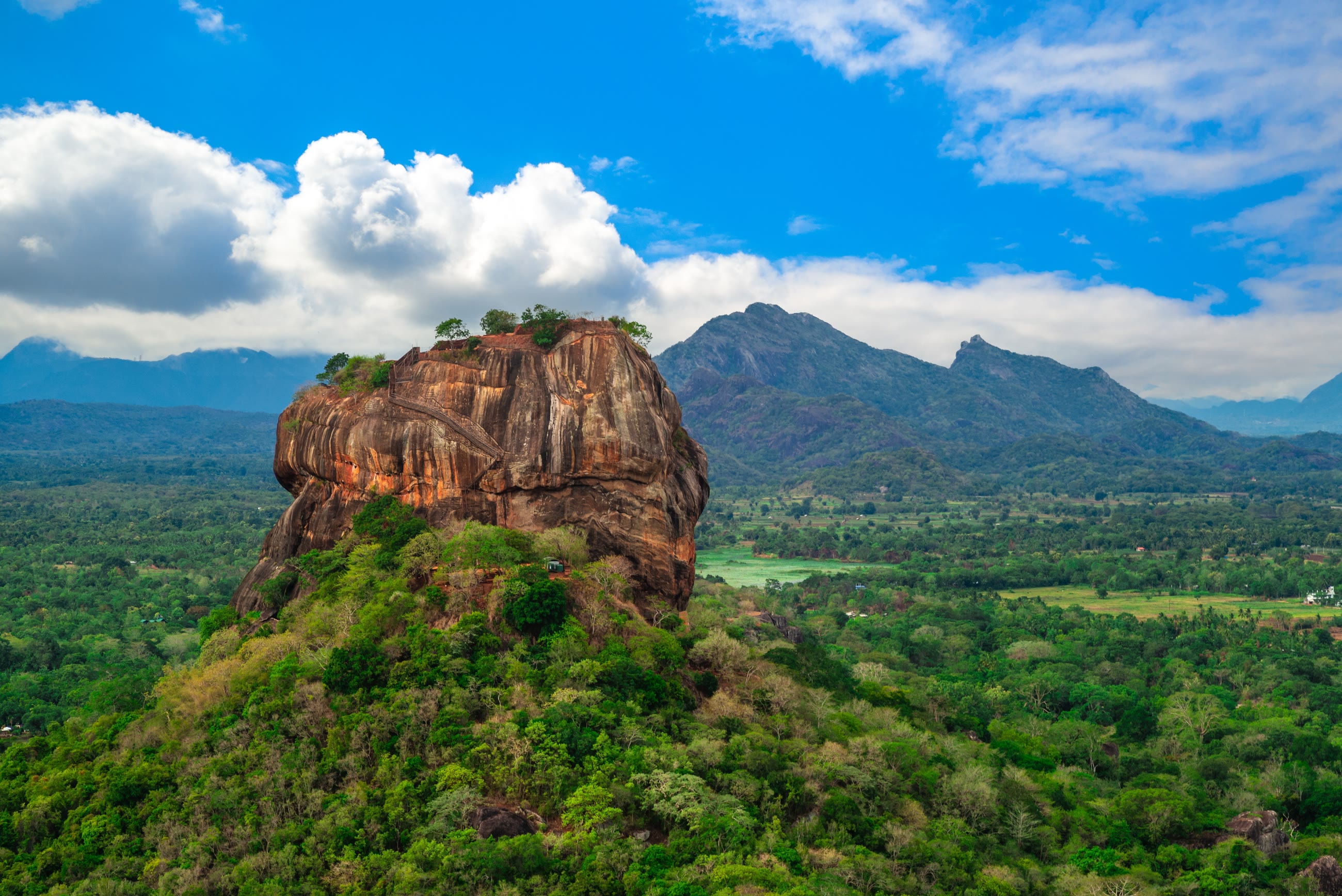
Sigiriya, Dambulla, Polonnaruwa: temples carved into the rock, a fortress on top of a monolith, giant Buddhas in the jungle.
The south coast
Mirissa for the whales, Unawatuna for lazing on the sand, Arugam Bay for the surf. Sri Lanka has a beach for every mood.
The right season for Sri Lanka
December to March for the west coast and the south (ideal climate, little rain). May to September for the east coast and the Cultural Triangle (far from the southwest monsoon). Avoid October-November: the inter-monsoon brings rain across the whole island, with impassable roads in the highlands (the northeast monsoon itself waters the north and east from December to February).
Humid tropical climate with monsoons. Pack light clothing, a rain jacket and plenty of sunscreen. In the mountains (Kandy, Nuwara Eliya), evenings turn cool (15-20°C).
The must-sees
The Kandy-Ella train
One of the most beautiful rail journeys in the world. Nearly seven hours of dreamlike scenery: terraced tea plantations, waterfalls, dizzying viaducts. Open windows, cool highland air: one of those journeys that stays with you for a long time.
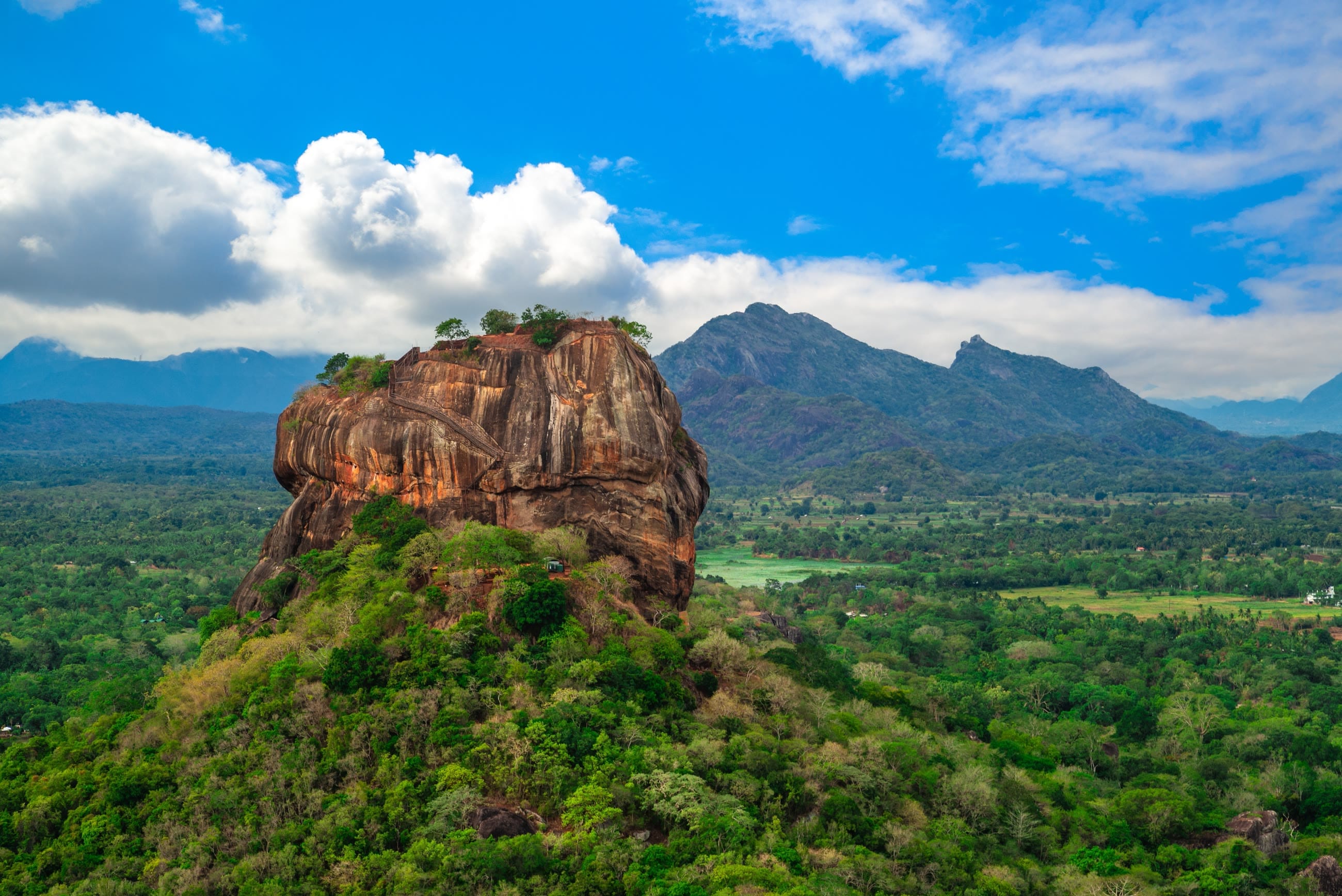
Sigiriya Rock Fortress
A 5th-century fortress carved into the top of a 200 m rock. 1,200 steps facing a 360° panorama. At sunrise, it takes your breath away.
Temple of the Tooth (Kandy)
One of the world's most important Buddhist shrines. An intensely sacred atmosphere, monks in orange, a daily ritual at 6:30pm. Shoes off before entering, shoulders and knees covered (proper dress required).
Whale watching in Mirissa
Blue whales from December to April. A 6am catamaran departure, total immersion. The thrill is real when a 25 m whale surfaces right beside the boat.
Cultural Triangle: Dambulla & Polonnaruwa
Millennia-old cave temples with 150 Buddha statues at Dambulla. Ruins of an ancient city at Polonnaruwa (12th century). A direct connection to Sri Lanka's spiritual heart.
South & east coast beaches: Mirissa, Unawatuna (south), Arugam Bay (east)
Wild coastline with waves (Arugam Bay), pure lazing about (Unawatuna), whale watching and nightlife (Mirissa). Unawatuna for easy swimming in a sheltered bay, Arugam Bay for surfing (May-September season), Mirissa as your base for whale watching.
Local flavours to try
- Coconut chicken curry: spicy and sweet at once, served with white rice and sambols (crunchy condiments)
- Kottu Roti: shredded flatbread stir-fried with vegetables, egg and sauce; addictive street food, made right in front of you
- Hoppers: small bowl-shaped coconut-milk pancakes with an egg in the centre, served with a mild curry
- Lamprais: rice, meat and spices wrapped in a banana leaf and baked: a culinary legacy of the Burghers (Sri Lanka's community of Dutch descent)
- Ceylon tea: up in the mountains, near the plantations. Tastings straight from the grower, subtle and pure in flavour
- Seafood in Negombo: grilled jumbo prawns, octopus, white fish prepared with coconut oil and lime
Practical tips
- Negotiate tuk-tuk fares (the local three-wheeled taxi) before getting in. Otherwise, Uber and PickMe (the go-to local app) work well in the cities. On the roads, self-driving: left-hand traffic, aggressive drivers, but doable with patience.
- Local buses: dirt cheap, chaotic, but a genuine slice of life. Book long journeys on air-conditioned tourist buses (Colombo-Kandy, Kandy-Nuwara Eliya) if comfort matters to you.
- Local SIM: USD 5-10, 4G coverage everywhere. Quick top-ups in any small shop. Reliable WiFi in hotels and cafés.
- Money: Sri Lanka runs on cash. ATMs everywhere, with easy withdrawals in Colombo/Kandy/beach towns. Small notes come in handy in the villages.
- Tipping: not compulsory but appreciated (10% in restaurants for good service). Wear slip-off shoes: temples and homes require it often.
- Safety: very safe for tourists. A few small-time tourist hustlers in Colombo/Kandy, nothing serious. Don't turn down Sri Lankan kindness, it's genuine.
Frequently asked questions · Sri Lanka
How much time do you need for Sri Lanka?
A minimum of 10 days to breathe without rushing (Colombo, Cultural Triangle, the train, the south coast). Ideally 12-16 days to add the mountains, diving or the north. Under 7 days, it's speed dating.
When is the best time to go?
December to March if you want the west coast, beaches + guaranteed sunshine. May to September for the east coast + mountains. Sri Lanka works year-round: the monsoons only spoil things regionally.
The Kandy-Ella train, is it really that beautiful?
Yes. The photos don't lie. Nearly seven hours of contemplative slowness. Book 2nd class (open doors) rather than 1st class (air-conditioned, sealed windows). That's where the essence of Sri Lanka lives.
Is Sri Lanka expensive?
It's one of the cheapest destinations in Asia. €40-60 / day to live well (a decent hotel, good food, activities). International flights remain the biggest expense.
Is it dangerous?
No, it's very touristy and safe. The odd pickpocket in Colombo at night, some pushy touts at first: nothing nasty. The usual city-traveller vigilance applies.
Can you combine Sri Lanka and the Maldives?
Yes, perfectly. 5-6 days in Sri Lanka + 4-5 days in the Maldives over 12 days in total. There is no regular Colombo-Malé ferry (a project has been announced but isn't operating). The connection is by plane, a flight of about 1 h. Contrast guaranteed.
Sri Lanka is the perfect trip for a first time in Asia, or for coming back and seeing it differently.
Browse a sample handbook