
Turkey
Turkey
The Bosphorus, bazaars and architecture
Turkey is a world of its own. Istanbul straddling two continents, the fairy chimneys of Cappadocia, the Lycian coast plunging into a deep blue sea: every stop is a complete change of scenery, and yet it all flows naturally.
At a glance
Exchange rates and flight times are approximate.
Why Turkey
Istanbul the magnificent
The Bosphorus at sunset, labyrinthine bazaars, rooftops overlooking the minarets. A city that never really sleeps.
Cappadocia
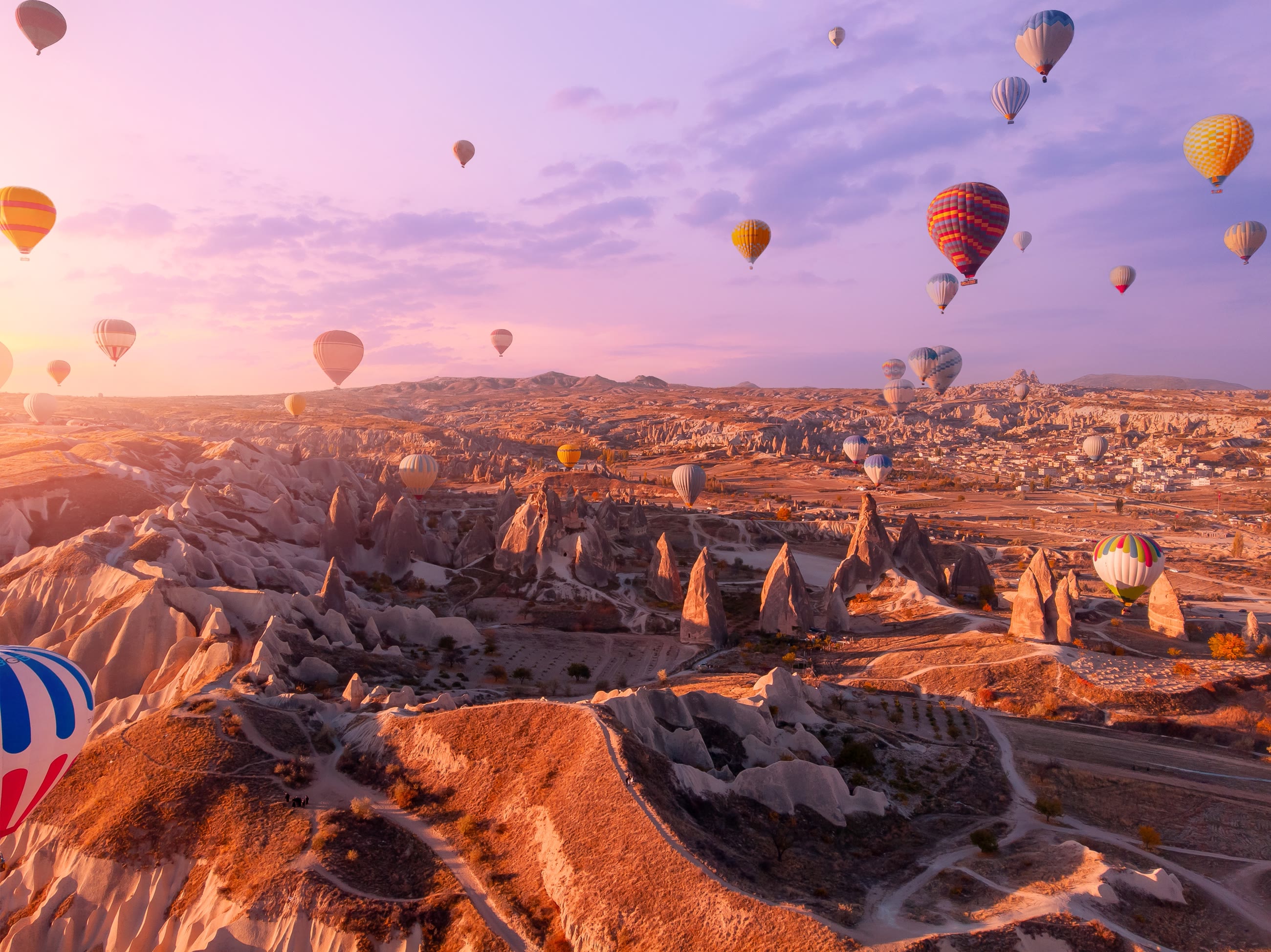
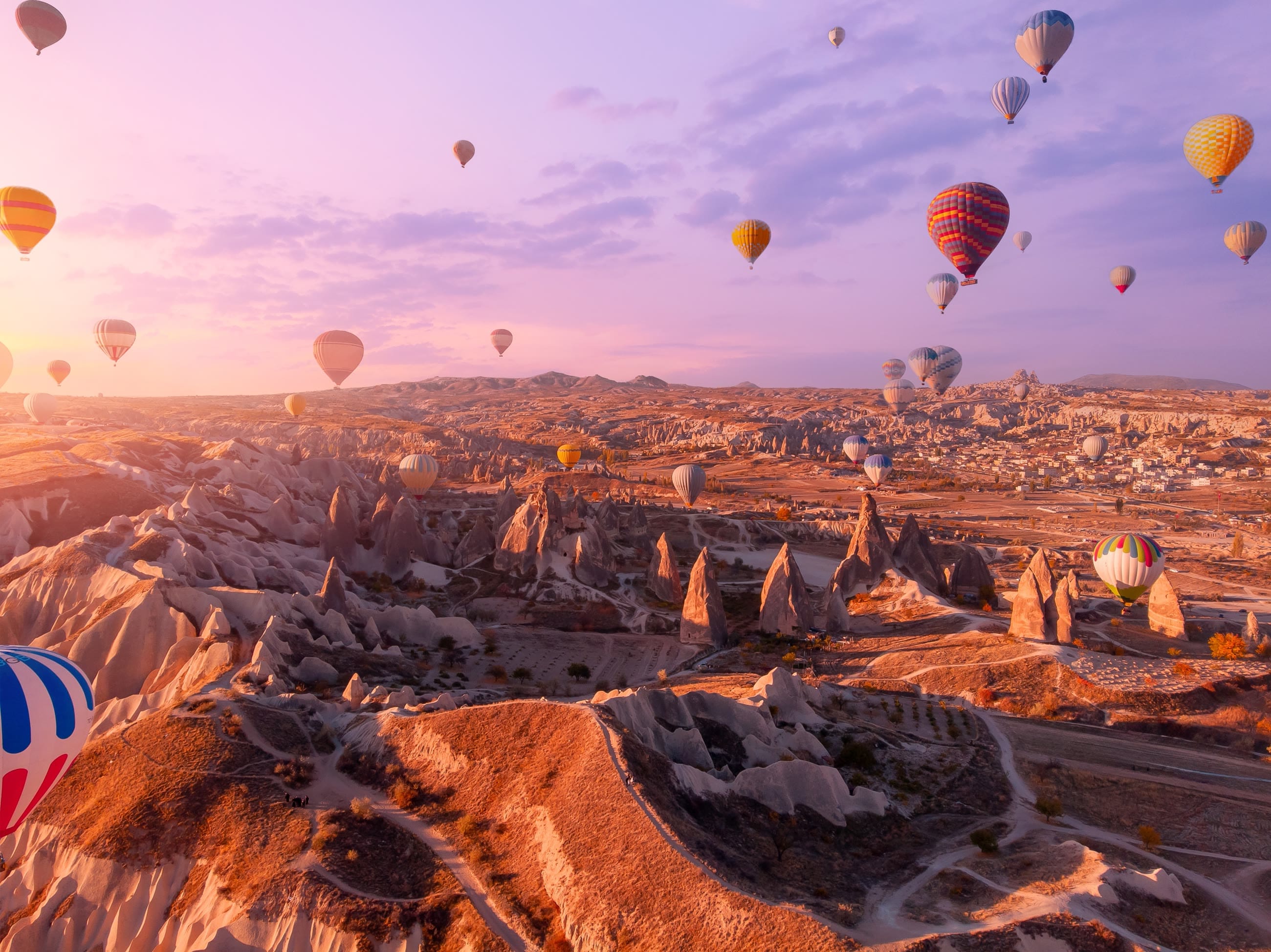
Hot-air balloons at first light, cave hotels, lunar landscapes sculpted by erosion. A setting that feels surreal.
Turkish cuisine
Street kebabs, refined mezze, baklava that melts in your mouth, black tea served everywhere. Turkey is one long feast.
The right season for Turkey
April to June, September to November. April-May brings blossoms, mild temperatures and few crowds. September-October is still pleasantly warm, with fewer tourists than in July-August. Avoid July-August (crushing heat in Cappadocia, massive crowds in Istanbul) and December-February (grey skies, frequent rain).
Mediterranean climate on the coasts, continental inland. Pack light clothing for summer and a layer for the cool May/October evenings. In Cappadocia, expect a big temperature swing between day and night.
The must-sees
Istanbul & the Bosphorus
The Blue Mosque, Hagia Sophia, the labyrinthine stalls of the Grand Bazaar, a ferry ride across the Bosphorus at sunset. Each shore tells its own story.
Cappadocia & hot-air balloons
Lunar landscapes carved by erosion, cave hotels, balloon flights at first light. The villages of Göreme, Ürgüp and Avanos.
Lycian Coast (Turquoise Coast)
Islands and coves reached by gulet (traditional wooden boat), the secret beaches of Ölüdeniz, the bay of Fethiye. Snorkeling and coastal hikes.
Ephesus & Pergamon
Major Greco-Roman ruins, the Temple of Artemis, the theatre of Ephesus. Living archaeology two hours from the Aegean coast.
Pamukkale travertines
White limestone terraces tumbling down like giant steps, swims in natural turquoise pools, the temple of Hierapolis at the top.
Turkish baths (hammams)
An essential ritual: a hammam in Istanbul, Bursa or Ankara. Scrub, massage, total relaxation. A quintessentially Turkish sensory experience.
Local flavours to try
- Kebabs and grilled skewers (döner, şiş kebab, adana kebab), served with lavaş bread, sumac onions, grilled tomatoes and yogurt or ayran.
- Meze: an assortment of small dishes (hummus, eggplant caviar, beyaz peynir, dolma, olives), served as a starter and traditionally paired with rakı (anise spirit) or an Efes beer.
- Börek and pastırma: filled pastries (meat, cheese) and spiced cured beef, perfect for breakfast or as an appetiser.
- Baklava and Turkish delight: pastries with honey, walnuts and pistachios; melt-in-the-mouth rose or pistachio lokum, not to be missed.
- Turkish tea (çay): black, sweet, served in small tulip-shaped glasses. Sharing tea together is a daily ritual.
- Mantı and homemade dumplings: small dumplings filled with cheese or spinach, topped with a spiced yogurt sauce. Local comfort food.
Practical tips
- Getting around: dolmuş (regional minibuses) are very cheap, long-distance buses are comfortable (FlixBus, Kamil Koç). Rent a car for Cappadocia and the Lycian Coast; roads are good and fuel is inexpensive.
- Money: change cash in Istanbul before heading into the regions; small notes are accepted everywhere. ATMs are widespread, though some smaller shops still prefer cash.
- Tipping: 5–10% in restaurants, round up taxi fares. Not compulsory but expected.
- Power sockets: type C/F (two round pins). An adapter is recommended for European chargers.
- Language: Turkish everywhere, English in the tourist areas of Istanbul and along the coasts. Learning merhaba (hello) and teşekkür ederim (thank you) opens doors.
- Useful apps: offline Google Maps, Moovit and İBB CepTrafik (Istanbul transport), BiTaksi (taxis), WhatsApp to reach local guides.
Frequently asked questions · Turkey
Can I drink the tap water?
Tap water is drinkable in Istanbul and the major cities, but not recommended off the tourist trail. Buy bottled water (1-2 TRY per litre) or use the public fountains (çeşme) found everywhere. Hotels and restaurants use filtered water, so no worries there.
What's the best way to watch the sunset in Istanbul?
The Eminönü → Kadıköy ferry at dusk (a few TRY, very crowded but magical). Otherwise: a rooftop bar in Galata (Mikla, Balkon, Cheers Hostel), pricier but quieter. Or the Bosphorus from a Sultanahmet café terrace, for the price of a coffee.
Are the Cappadocia hot-air balloons safe?
Yes, very safe. Experienced pilots, dawn flights only (stable conditions). A flight costs €180–250 per person through local agencies. Book the day before or 2 days ahead; expect waiting lists in high season.
How much does a gulet (boat) cost on the Lycian Coast?
A 3-4 day cruise runs ≈ €300–600 per person all-inclusive (shared boat). Chartering the whole boat costs far more. Includes meals, snorkeling and hidden islands. A little bargaining is possible outside high season.
Which neighbourhood should I stay in in Istanbul?
Sultanahmet for the monuments (noisy, touristy). Galata/Beyoğlu for nightlife and restaurants (young, lively). Balat for a bohemian feel and cafés. Besiktas/Ortaköy for calm along the Bosphorus. Each one offers a different Istanbul.
Do I need a visa for Turkey as a Luxembourg citizen?
No. As a Luxembourg/EU national, you are visa-exempt for 90 days (within any 180-day period). No eVisa or registration needed. A passport is mandatory (national ID cards are not accepted), valid for at least 150 days beyond your entry date.
Turkey is one of the few countries where you can have it all: culture, beaches, food and adventure in a single trip.
Browse a sample handbook