
Philippines
Philippines
Turquoise lagoons and wild islands
The Philippines is 7,641 islands and just as many reasons to go. Lagoons of an unreal turquoise, rice terraces 2,000 years in the making, some of the richest waters on the planet, and a people whose smile has become legendary.
At a glance
Exchange rates and flight times are approximate.
Why Philippines
Palawan & El Nido
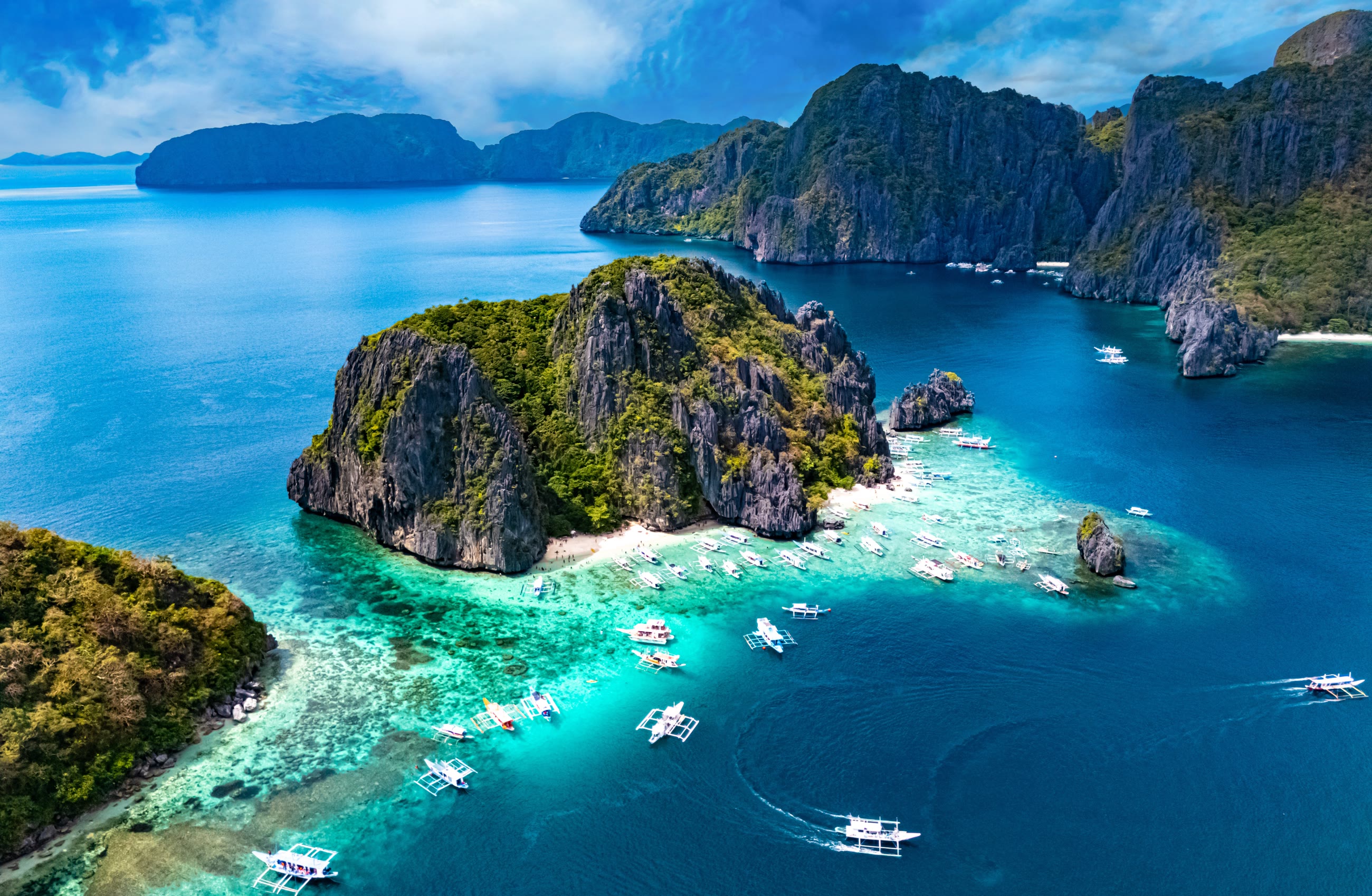
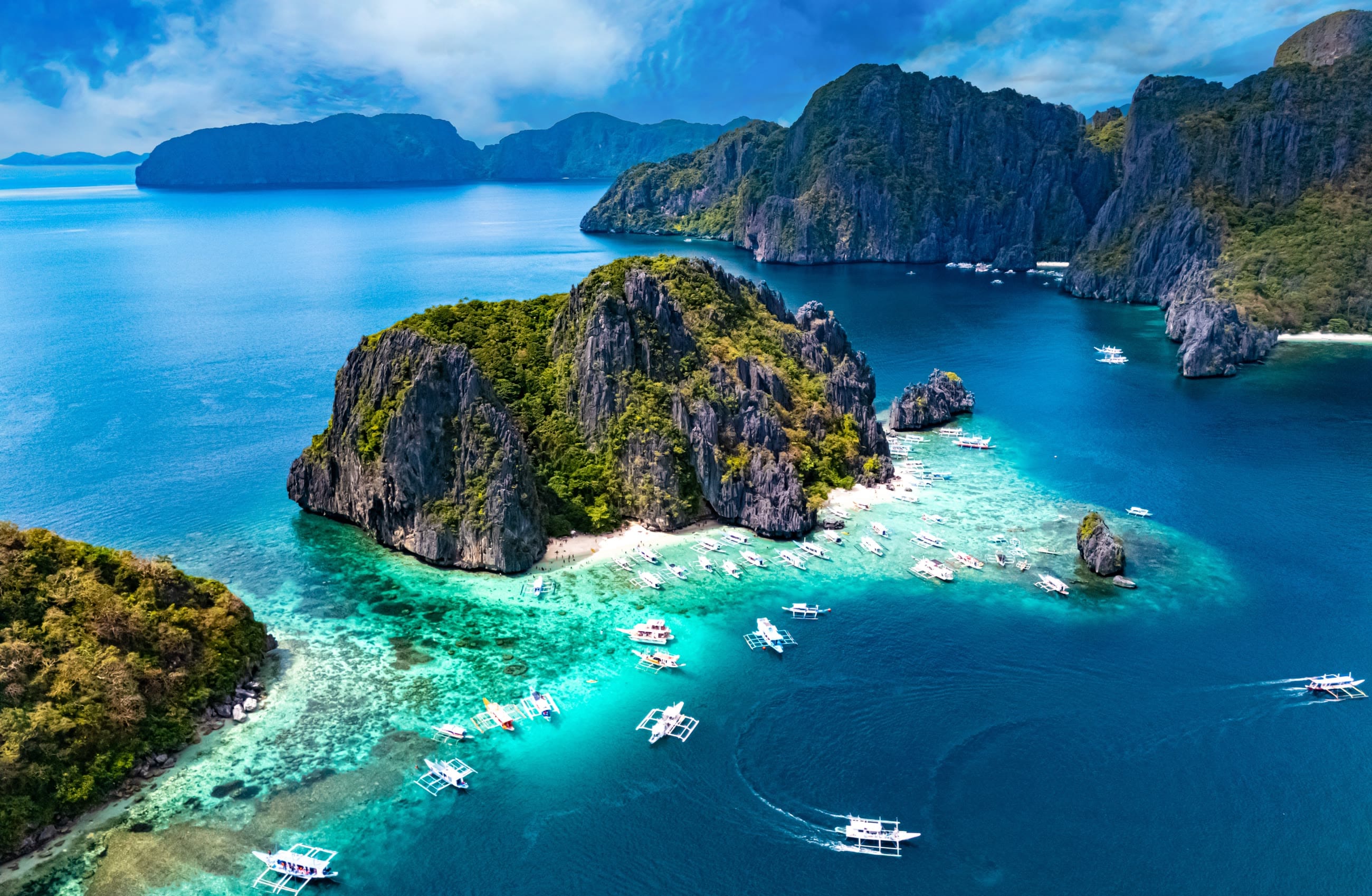
Secret lagoons tucked between karst cliffs, deserted beaches you can only reach by boat. Paradise exists, and it's here.
The underwater world
Tubbataha, Apo Reef, Moalboal: world-class diving and snorkeling spots, complete with whale sharks and turtles.
The Banaue rice terraces
Terraces carved into the mountains over 2,000 years by the Ifugao people. A living, dizzying heritage.
The right season for Philippines
December to May (dry season); avoid June to November (monsoon). Tourist peaks: December–January (holidays), skip them if you're after peace and quiet. The sweet spot: February–April, less rain and fewer crowds.
Tropical. Constant humidity (70–90%). Heavy rain from June to November. December–May: dry and far more pleasant. Temperatures: 25–32°C all year round. Pack light clothing, a rain jacket and sun protection.
The must-sees
Palawan & El Nido
Turquoise lagoons ringed by karst cliffs, islets you can only reach by boat. Coron for the Japanese wrecks, Big Lagoon and Small Lagoon for doing blissfully nothing.
The Banaue rice terraces
2,000 years of terraces carved into the northern mountains by the Ifugao people. UNESCO World Heritage, with hikes to Batad or Tappiya.
Boracay & Carabao
Boracay is famous (and very busy) for its white-sand beaches and lively evening bars. Nearby Sibuyan is far calmer, with exceptional diving.
Tubbataha Reefs & Apo Reef
Some of the most renowned dive sites in the world. Whale sharks, turtles, pristine coral. Mid-March to mid-June is the only window when the sea is workable: Tubbataha can only be visited on a liveaboard dive cruise out of Puerto Princesa. Apo Reef, on the other hand, is reachable from Coron/Sablayan.
Cebu & Moalboal
A lively central island. Moalboal for diving and snorkeling with sardine shoals (the famous 'sardine run', visible right from the shore). The Kawasan waterfalls are a few hours away.
Metro Manila
Museums (Ayala, National), the colonial district of Intramuros, the Divisoria markets. An unavoidable gateway but not the most charming one: see it quickly, then escape to the islands.
Local flavours to try
- Adobo (chicken or pork braised in vinegar and garlic): the national dish, humble and delicate.
- Kinilaw (local ceviche: raw fish marinated in coconut vinegar and citrus, served fresh in the morning).
- Lechon (whole spit-roasted pig with a vinegar-based sauce): Cebu's specialty, festive and indulgent.
- Sinigang (sour soup with tamarind, pork and vegetables): comforting and hugely popular.
- Lumpia (small fried rolls, sweet or savory depending on the region).
- Halo-halo (a colorful dessert: shaved ice, fruit, beans, condensed milk, sugar, the local shaved-ice treat par excellence, served everywhere as soon as it gets hot).
Practical tips
- Money: the peso (PHP). ATMs everywhere in Manila, less reliable on the islands, so withdraw cash ahead of time. Cards accepted in premium hotels and restaurants, not everywhere.
- Island hopping: regular ferries connect Manila, Cebu and Coron. Basic on board but efficient. Budget €10–15 for a 2–3 h crossing.
- Certified diving: best quality in Coron/Moalboal. 3–5 day packages for €300–500 (including accommodation, meals and dives).
- Language: English is spoken everywhere (a colonial legacy), Tagalog optional. Smiles, kindness, zero aggression: a wonderfully warm welcome.
- Electricity: Type A/B sockets (American style). 220 V. An adapter is essential.
- Power cuts happen on the smaller islands: keep a charged power bank for your devices.
Frequently asked questions · Philippines
When should I go to avoid the monsoon?
December–May is ideal (dry season). June–November means heavy rain, rough seas and fewer boat trips. February–April is the best compromise: dry and less touristy than December–January.
Are the Philippines dangerous?
Manila: stay alert (petty crime, pickpockets). The tourist islands (Palawan, Boracay, Cebu) are very safe, with economies built on tourism. No conflict zones on any standard itinerary. Relax, and travel smart (no wandering alone at night in city centers).
Do I need a visa? How long can I stay?
EU: 30 days free on arrival (by air, with a valid passport). Otherwise: apply for a visa beforehand or pay 3,500 PHP at the airport (€60). Beyond 30 days: request a local extension (around 2,500 PHP) or exit and re-enter.
How do I visit 7,641 islands in 2 weeks?
You don't. Choose: (1) Palawan (Coron-El Nido), 8–10 days. (2) Cebu-Bohol-Moalboal, 8 days. (3) The north (Banaue-Batanes), 6 days, plus Manila. Each region is 2,000+ km from the next. We'll build you a coherent itinerary so you don't lose your trip to transit.
Is diving accessible without certification?
Snorkeling: 10 minutes of instruction, open to everyone. Scuba diving: PADI certification (3–5 days, €300–400) is strongly recommended for the best sites. Open Water courses are widely available at reasonable prices. Quality instructors everywhere.
Common health issues? Insurance?
Traveler's diarrhea is common (tap water is unsafe, ice cubes are a gamble). Travel insurance is a must: it should cover repatriation and hospital care (bring a basic medical kit: some everyday medicines aren't always available locally). Typhoid and hepatitis A vaccines recommended. Private hospitals are good in Manila/Cebu, basic on the islands.
The Philippines is huge and not easy to get around. A good itinerary changes everything: that's exactly what we do.
Browse a sample handbook