
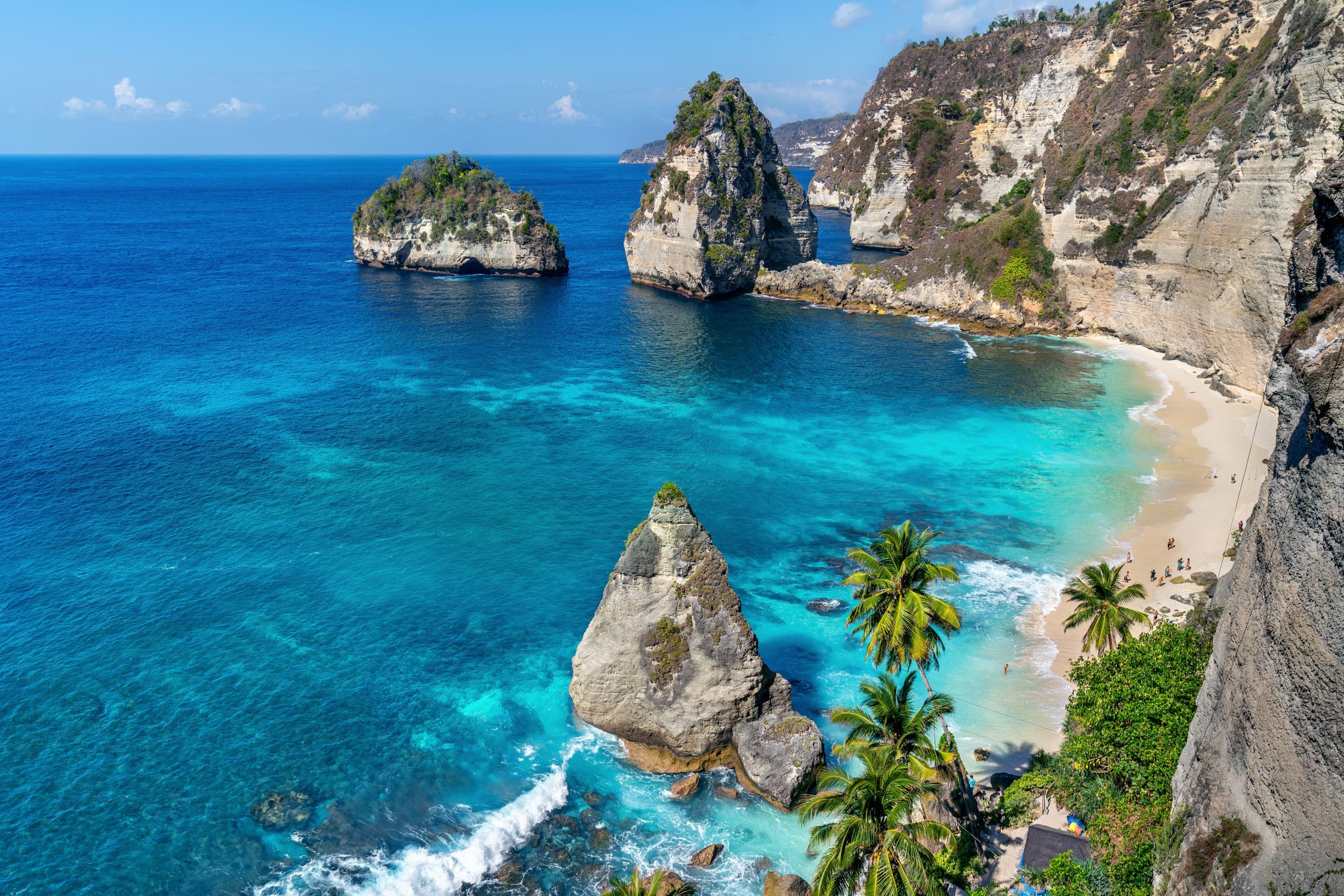
Dry season from May to October, July and August packed, rain far less of a problem than its reputation suggests, and two ideal windows in spring and autumn: our honest reading of the Balinese calendar, crowds and sea conditions included.
“When should I go to Bali?” has a short answer: during the dry season, which settles in around April or May and holds until October. But that short answer misses what matters most: July and August concentrate the crowds, the rainy season is far less punishing than its reputation, and the island's finest months are not the ones everyone books. Here is our reading of the Balinese calendar, built on the itineraries we put together there, with crowd levels and sea conditions factored in alongside the weather.
One preliminary that simplifies everything: in Bali, temperature is not part of the equation. It sits at 28 to 30°C all year round, the sea stays between 28 and 30°C, and days last around 12 hours whatever the date, as you would expect on the equator. So the real question is never “will it be hot?” but “will it rain, for how long, and how many of you will be there?”. Hence the two seasons that shape the whole calendar, the dry and the wet, plus two shoulder seasons which are, as we shall see, the real winners. Add one variable the guidebooks often forget: crowd levels, which turn the same island into two radically different experiences depending on the month.
The dry season, May to October: glorious weather
Clear skies, slightly less humid air, dry trails for sunrise hikes in the mountains, a readable sea for boat crossings: on paper the dry season is the ideal window, and that is precisely why July and August are a problem. On top of the fine weather come the European and Australian holidays, and the famous spots hit saturation: Uluwatu at sunset, Ubud's Monkey Forest, the beach clubs of Canggu. The best addresses sell out two to three months in advance, and the viral sites are visited in single file at peak hours. May, June, September and October offer the same weather, without that density.
The rainy season, November to March: better than its reputation
Let us stop you right there: the Balinese monsoon is not a continuous curtain of rain. The typical pattern is one intense tropical downpour lasting an hour or two, often in the late afternoon, framed by long stretches of perfectly usable sky. In exchange, the island empties, accommodation opens up again, and the landscapes reach their peak: rice fields in dazzling green, waterfalls at full flow, lush vegetation everywhere. January and February remain the wettest and most humid months; November and March, on the other hand, are “light” rainy-season months we happily stand behind for a trip built around culture, rice fields and wellbeing. The right reflex for this period: schedule visits and walks in the morning, keep the quiet time for the late afternoon, and let the downpour pass over a kopi Bali rather than under a poncho.
- What works very well: Ubud and the inland heart of the island, waterfalls in full spate, the rice terraces of Jatiluwih or Sidemen, temples without the crowds, spas and cookery classes while the rain falls.
- What becomes unreliable: night treks to the volcanic summits (slippery trails), boat trips, visibility for snorkelling and diving.
- What you have to accept: constant humidity of 80 to 90%, the odd road flooded for an hour, and one plan B per day built into the programme.
Our favourite window: April-May and September-October
If your dates are flexible, this is the answer. April and May mark the exit from the rains: an island still green from the monsoon, skies already dry, crowds contained. September and October offer the mirror image: the tail end of the dry season, without the density of July and August. In both cases you get the year's best weather-to-crowds ratio: the major sites can be visited calmly, boat days can be planned without stress, and sunrise over the rice fields comes with the silence people travel to Bali for. These are the windows we recommend to most of our travellers, and the ones we would choose for ourselves. One point of vigilance: around the May bank holidays and the autumn half-term, a few in-demand addresses go quickly, so it is best to lock in the key nights 6 to 8 weeks ahead.
Nusa Penida and the sea: it is all about timing
Sea conditions are decided as much by the hour as by the season. The speed-boat crossing to Nusa Penida, 30 to 45 minutes from Sanur, and snorkelling with manta rays at Manta Point are far better in the morning: a calmer sea, wind that generally picks up as the day goes on, and visibility at its best. Our advice, valid all year but critical outside the peak dry season: boat early, snorkelling in the first part of the day, the Kelingking cliffs and Angel's Billabong afterwards, and back by mid-afternoon. And if the swell cancels an outing, a catch-up day built into the itinerary beats a single slot on which everything depends.
Bali month by month, in short
- April-May: our first choice, the island still green, weather already dry, crowds gentle.
- June: a very good month, just before the high-season wave.
- July-August: impeccable weather but a full island, bookings 2 to 3 months ahead essential.
- September-October: our second choice, dry and noticeably calmer.
- November-December and March: short downpours, dazzling rice fields, a quiet island outside the festive season.
- January-February: the wettest months, best kept for culture and wellbeing trips.
“In Bali you do not choose a month for the weather: you choose a balance between the sky, the sea and the crowds.”
Your dates are already set and you are wondering what they allow? Tell us: we will give you a frank picture of what the island will look like at that moment, and we will build the itinerary that makes the most of it, boat days, plan Bs and the right bases included.
An itinerary built around you, with no packages and no middlemen?
Let's talk about your trip