
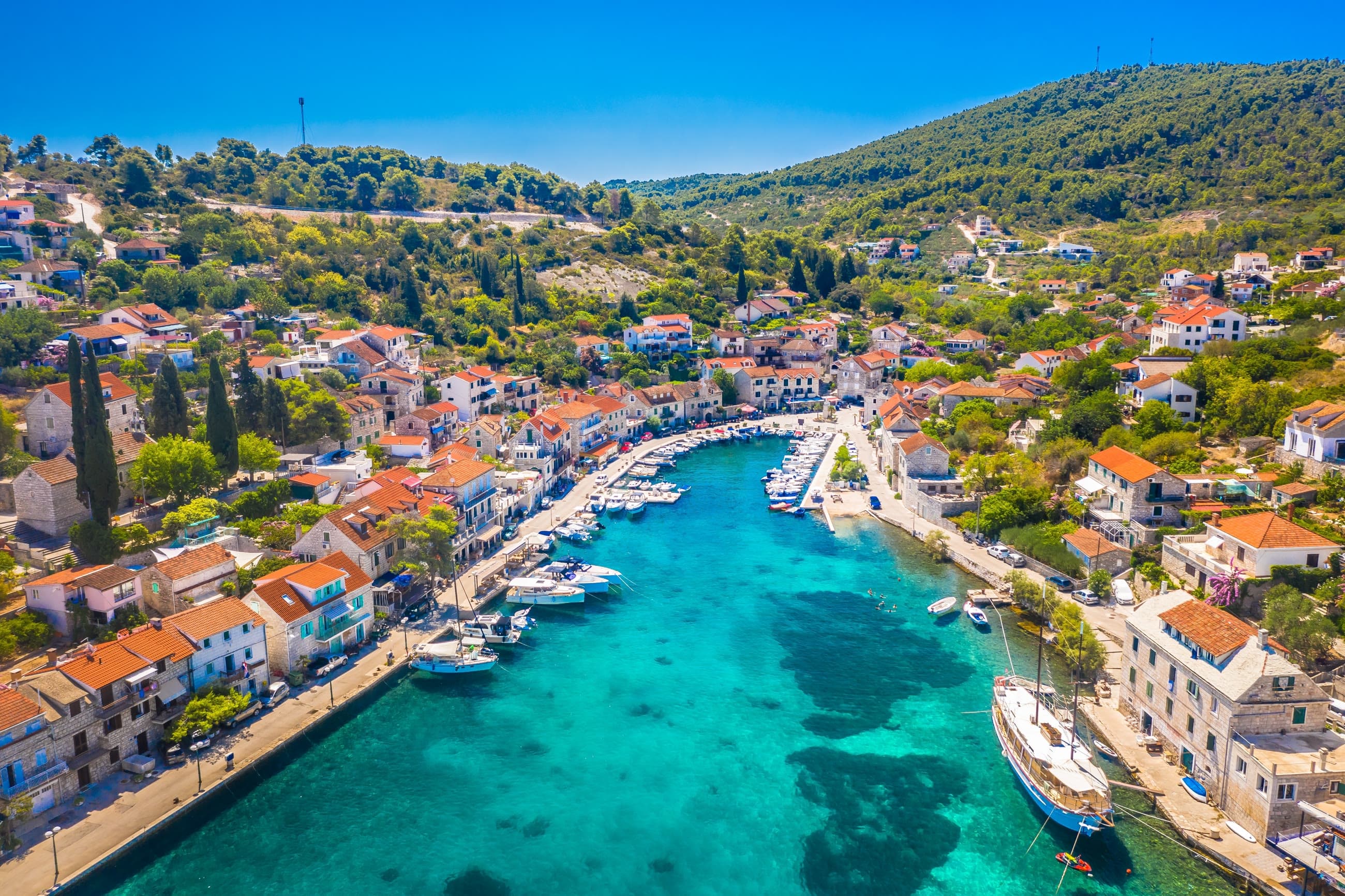
June and September to swim in a 22-24°C sea without fighting for space, July and August strictly for crowd lovers, May and October for Plitvice and the cities: our frank reading of the Croatian calendar, with the numbers that help you decide.
Croatia is around a 2-hour flight from Luxembourg, with no time difference and the euro in your pocket: the temptation is to go “whenever you can”. Bad idea. Between a saturated Dubrovnik in August and islands half asleep in November, the same country delivers radically different trips depending on the month. Here is our honest reading of the Croatian calendar, period by period, with the numbers that let you decide according to what you are coming for.
The parameter that governs everything: the Adriatic takes time to warm up, and time to cool down. In May, the sea tops out at around 18 to 20°C; by late June it reaches 22 to 23°C; in September it holds between 22 and 24°C while the crowds have already gone home. That thermal inertia is what creates the gap between the tourist high season, July and August, and the real best season for anyone who wants to swim without sharing their cove with fifty towels.
June and September: the sweet spot, no hesitation
If your dates are flexible, aim for June or September. The sea is warm, the days are long, everything is open, and visitor numbers stay reasonable: you can still find a table without booking three days ahead, and Dubrovnik's ramparts can be walked without queuing in the late afternoon. Prices follow the same logic: for the same accommodation, expect 20 to 30% less than in midsummer on the coast. Between the two, September has our slight preference: the water is at its warmest after a whole summer of heating, the light turns golden, and the grape harvest brings the Dalmatian hinterland to life. June keeps the advantage of very long days and countryside still green.
- Who it suits: the beach + cities + islands combination, couples, families free of school holidays.
- The sea: 22 to 24°C, perfect for swimming, diving or heading out by kayak.
- The catch: the most in-demand addresses (Hvar, Dubrovnik within the walls) sell out early; book 3 to 4 months ahead.
July-August: packed, hot and expensive, don't say we didn't warn you
Let us be direct: this is the period we advise against most often, unless school holidays leave you no choice. Dubrovnik tops 15,000 visitors a day, cruise passengers included, the thermometer climbs to 35°C, and prices jump by around 40% on the coast, accommodation and car hire alike. Add the queues at the ferry piers, the saturated car parks and coves turned into urban beaches: the pleasure-to-price ratio hits its floor for the year. If these are your only possible dates, all is not lost, but you have to play it differently: aim offshore rather than along the coast, early morning rather than afternoon.
May and October: Croatia for cities and parks
The sea still cool on one side, already cooling on the other, but this is the best moment for everything else. The Plitvice lakes, their emerald waterfalls and wooden walkways are at their best in these periods: in summer, the site absorbs up to 15,000 visitors a day and is walked in single file. Split and Diocletian's Palace, Zadar, Šibenik and the lanes of Rovinj get their local life back, and Istria unrolls its hilltop villages without the coaches. October adds a gourmet argument: peak truffle season around Motovun, with accommodation rates dropping sharply. One point of vigilance: the bora, the cold north-easterly wind, can blow hard in spring and autumn and occasionally disrupt crossings and swimming.
November to April: real charm, if you know where to go
The Croatian off-season has genuine charm: Dubrovnik returned to its residents, Zagreb and its Austro-Hungarian heritage cafés, Split mild even in January. But choose it with your eyes open: a share of the coast's hotels and restaurants closes from November to April, and ferries to the islands switch to reduced timetables, sometimes just a few crossings a day. This is a period for cities, parks and the interior, not for an island-hopping trip. The real bonus: it is the cheapest time of year, flights included, and the most authentic for anyone who likes destinations outside their summer stage set.
From Luxembourg: the markers that help you decide
Logistics work in Croatia's favour all year round: around 2 hours of flying on the seasonal direct (Luxair to Dubrovnik; roughly 1.5 hours to Zagreb), or 4 to 5 hours door to door with one stop via Vienna or Frankfurt, no time difference, the euro as currency, and Croatia is an EU member (a simple identity card is enough) as well as part of the Schengen area since 2023 (no more border checks). On the budget side, allow €60 to €120 per day per person staying on the coast in 3 or 4 star places, and more like €40 to €70 away from Dubrovnik and the most sought-after islands. For a 10-day trip as a couple, a total budget of €3,000 to €4,500 all in is realistic, flights, car and ferries included. And for a June or September departure, book flights and accommodation 3 to 4 months ahead: those two months are no longer anyone's secret.
- Beach and swimming: June and September, sea at 22-24°C, reasonable crowds.
- Islands and crossings: June to September, when the ferries run at full frequency.
- Cities and culture: May and October, or winter for Dubrovnik without the crush.
- Plitvice and the parks: May-June or September-October, never an August weekend.
- Tight budget: November to April, accepting closures and reduced ferries.
“June and September have only one flaw: sooner or later, everyone will know.”
Tell us your date constraints and what you are coming for, beaches, islands, cities or parks: we will tell you frankly which window to choose, even if that means suggesting you shift by a month. And we will build the itinerary to match, with ferries and accommodation booked at the right moment.
An itinerary built around you, with no packages and no middlemen?
Let's talk about your trip