
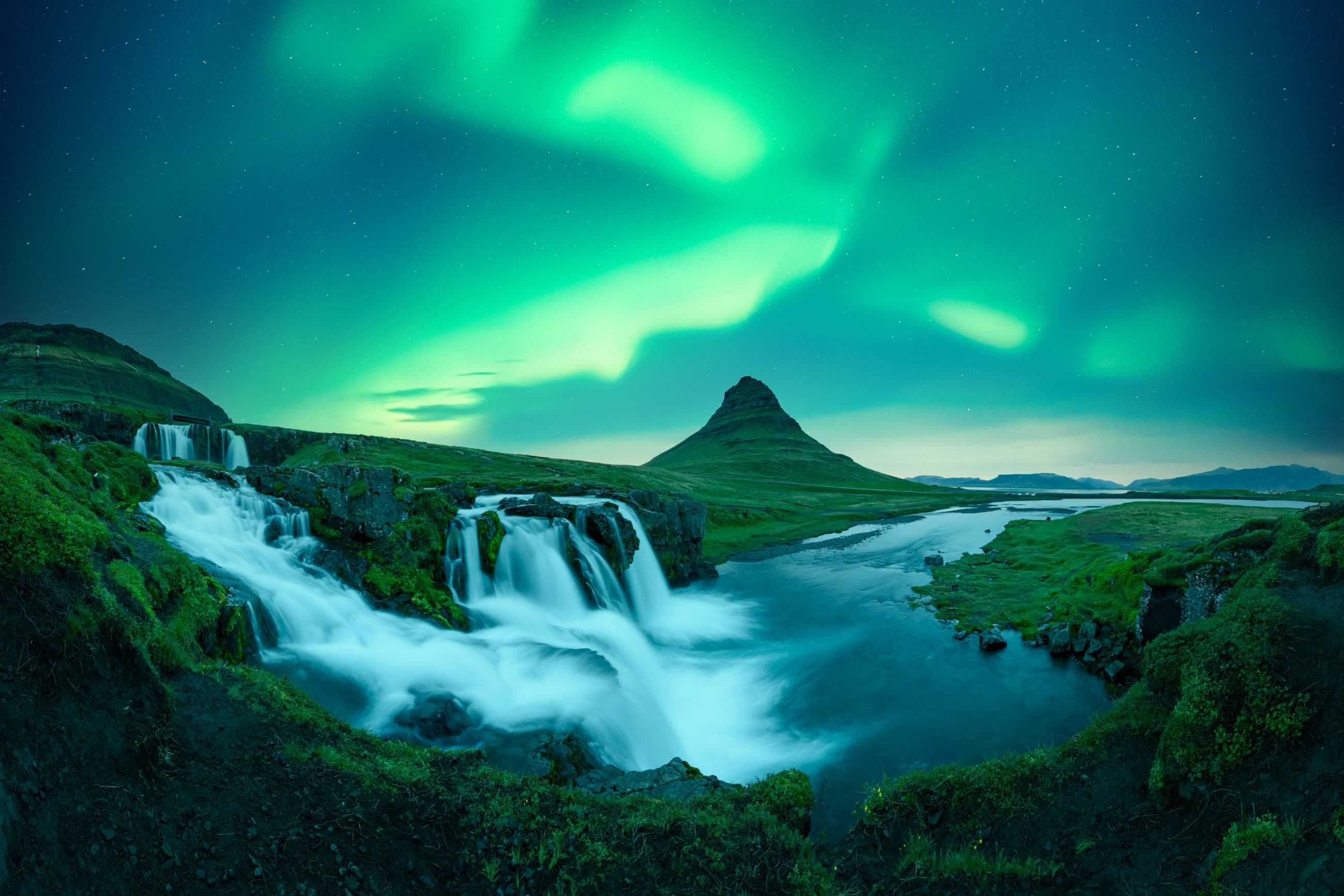
Northern lights, the full Ring Road, puffins or a tight budget: the best time to visit Iceland depends on what you are going there for. Our honest season-by-season analysis, without selling the island as perfect all year round.
"When should we go to Iceland?" is the question we hear most about this destination, and it is the only one where our answer always begins with another question: what are you going there for? Northern lights, hiking in the highlands, the full Ring Road, a controlled budget: every wish has its season, and no season ticks every box. Here is our honest reading, month by month, after several stays on the island at different times of year.
One thing first, because it prevents a lot of disappointment: you do not choose Iceland from the photos, you choose it by the light and the state of the roads. Between the near-permanent daylight of June and the 4 to 5 hours of brightness in December, it is literally not the same country: same waterfalls, same black beaches, but a radically different daily rhythm, budget and level of driving skill required. And some regions, the highlands first among them, are simply out of reach for half the year, whatever your motivation.
Summer (mid-June to August): the whole island, but not to yourselves
This is the everything season: the Ring Road loops comfortably in 10 to 14 days, the highland F-roads open (Landmannalaugar, Askja), and near-permanent daylight lets you hike at 11pm in golden light. The Westfjords and the East become accessible without winter driving experience, and daytime temperatures hover between 10 and 15°C, sometimes 20°C on the good days. The flip side is just as clear: it is the most expensive and the busiest time of the year. Decent accommodation sells out 6 to 9 months ahead, a basic double room easily tops €150 to €200 a night on the south coast, 4x4 and campervan rentals follow the same curve, and the Golden Circle sites or the Jökulsárlón lagoon are visited in a steady flow amid the coaches.
- Who it suits: a first trip to Iceland, the full Ring Road, hikers aiming for the highlands and the Westfjords.
- What to accept: the highest budget of the year, bookings made far in advance, crowds at the major sites between 10am and 5pm.
- What you will not get: the northern lights, invisible under Iceland's too-bright summer sky.
September-October: our choice, and we stand by it
This is the window we recommend most often, and the one we pick for ourselves. The nights turn dark enough for the northern lights from late August, the tundra shifts to red and gold in September, the waterfalls are still fed by generous flows, and the Ring Road remains drivable in a standard car most of the time, at least until mid-October. The summer crowds have gone home, accommodation prices drop by 20 to 30%, whales can still be watched from Húsavík in September, and the black-sand beaches turn almost deserted at the end of the day. With 11 to 13 hours of daylight in September, the days stay long enough for sightseeing, and the nights dark enough to watch the sky. The compromise: less stable weather, with first snowfalls possible at altitude in late October, which calls for flexibility in the programme and real slack between stages.
Winter (November to March): magical, but demanding
Winter Iceland is spectacular: northern lights at the peak of the season, blue ice caves under Vatnajökull (accessible only from November to March, with a guide, expect €150 to €200 per person), waterfalls partly frozen, Jökulsárlón icebergs stranded on the diamond beach, an unreal atmosphere on deserted black sands. But let us be direct: with 4 to 5 hours of daylight in December-January, every day has to be planned to the minute, one major site in the morning, another in the afternoon, no more. And driving becomes a serious subject: icy roads, wind strong enough to rip off a carelessly opened car door, storms that close entire routes within hours. The road.is website and safetravel.is alerts become your home pages, and you cancel a stage without a second thought when the weather decides for you.
- Who it suits: aurora hunters, photographers, travellers already confident on snow.
- The right format: day trips from 2 or 3 bases on the south coast rather than the full Ring Road, in a 4x4, no exceptions.
- The bonus: the lowest prices of the year in November and from January to March, outside the festive period.
May: the smart compromise
May is the quiet season we suggest to careful budgets: already very long days (16 to 20 hours of light), main roads clear, accommodation and rental rates still 20 to 40% below July's, and the major sites without the summer density. It is also when the puffins return, nesting on the cliffs of Dyrhólaey, Látrabjarg and the Westman Islands from May until August: watching them from a few metres away, no telephoto lens and no jostling, remains one of our favourite Icelandic memories. Add lambs in the fields and the first genuinely mild days. The limits: some high-altitude tracks stay closed, the vegetation is only just emerging from winter, and a few waterfalls keep their late casing of ice.
The highlands: summer only, no negotiation
One detail that reshapes entire itineraries: the interior tracks (F-roads) generally open only from late June to early September, depending on the snowmelt, and demand a proper 4x4, river crossings included. Landmannalaugar, Thórsmörk and Askja are therefore off the programme for the rest of the year, unless you join a guided super-jeep excursion, a superb experience priced accordingly. If the highlands are your priority, the question of when to visit Iceland is already settled: July-August, full stop.
The mental checklist: choose by desire, not by month
- Northern lights: September-October for travel comfort, November to March for intensity and long nights.
- The full Ring Road, self-drive: mid-June to mid-September, in a standard car.
- Hiking and the highlands: July-August only, with bookings made well ahead.
- A controlled budget: May, or October-November if you can live with temperamental weather.
- Photography: September-October for the colours and the low, raking light, winter for the ice and the dramatic skies.
- Puffins and wildlife: May to early August on the colony cliffs, whales from June to September.
“There is no bad season in Iceland. There are only trips misaligned with what you went there to find.”
Tell us what you are looking for in Iceland, your possible dates and how you feel about driving: we will tell you frankly which window to choose, even if that means advising you to shift your departure by a month. And we will build the itinerary to match, with well-placed accommodation and a weather plan B included.
An itinerary built around you, with no packages and no middlemen?
Let's talk about your trip