
A 1,300 km loop, from the waterfalls of the south coast to the solfataras of Mývatn: our 10-day Route 1 itinerary, anticlockwise, with the stops that deserve two nights and the real rules for driving in Icelandic wind.
Route 1 is a 1,300 km loop around Iceland: giant waterfalls and black-sand beaches in the south, the Jökulsárlón glacier lagoon, the fjords of the East, the volcanic region of Lake Mývatn in the north. Ten days is enough to complete it without stress, on one condition almost nobody mentions: driving it the right way round. We drove this loop anticlockwise, and we would never do it any other way again. Here is why, and the stage-by-stage plan.
First, let us frame the season: this itinerary is designed for the window from mid-June to mid-September, when the whole loop can be driven serenely in a standard car. To choose your dates in detail, northern lights included, we have written a full article on when to go to Iceland, season by season: here, we talk road, stages and rhythm. Ten days is the right format: the loop can be done in 7 days at a sprint, but it is those three days of slack that turn it from a rally into a journey.
Why anticlockwise changes everything
Three reasons, all practical. One: the most spectacular sites, the Golden Circle, the south coast, Jökulsárlón, fall within the first four days, while you are fresh and nothing has yet slipped in the schedule; if the weather turns late in the trip, you sacrifice a connecting stretch, not the essentials. Two: the longest day at the wheel, the crossing of the north-west, comes at the end of the route, once Icelandic driving has become second nature. Three: you finish less than two hours from Reykjavik, with a genuine safety margin before the flight home, instead of spending your last evening at the far end of the island.
The 10 days, stage by stage
- Day 1: arrive at Keflavík (4 to 5 hours' direct flight from Luxembourg, or 5 to 7 hours via Copenhagen or Dublin), pick up the car, night in Reykjavik.
- Day 2: the Golden Circle: Þingvellir, the Geysir hot springs, the Gullfoss waterfall; night near Hella or Selfoss.
- Day 3: the south coast: Seljalandsfoss, Skógafoss, the black beach of Reynisfjara; night in Vík.
- Day 4: Skaftafell and its hikes at the foot of Vatnajökull, then Jökulsárlón and the Diamond Beach; night near Höfn.
- Day 5: the fjords of the East at fishing-village pace, with a detour via Seyðisfjörður; night in Egilsstaðir.
- Day 6: head north: the Dettifoss waterfall, arrival at Lake Mývatn, geothermal baths at the end of the day.
- Day 7: a full day at Mývatn: pseudocraters, the Hverir solfataras, lava fields; night on the spot.
- Day 8: Goðafoss on the way, a pause in Akureyri, the capital of the North, then the crossing westwards; night near Borgarnes.
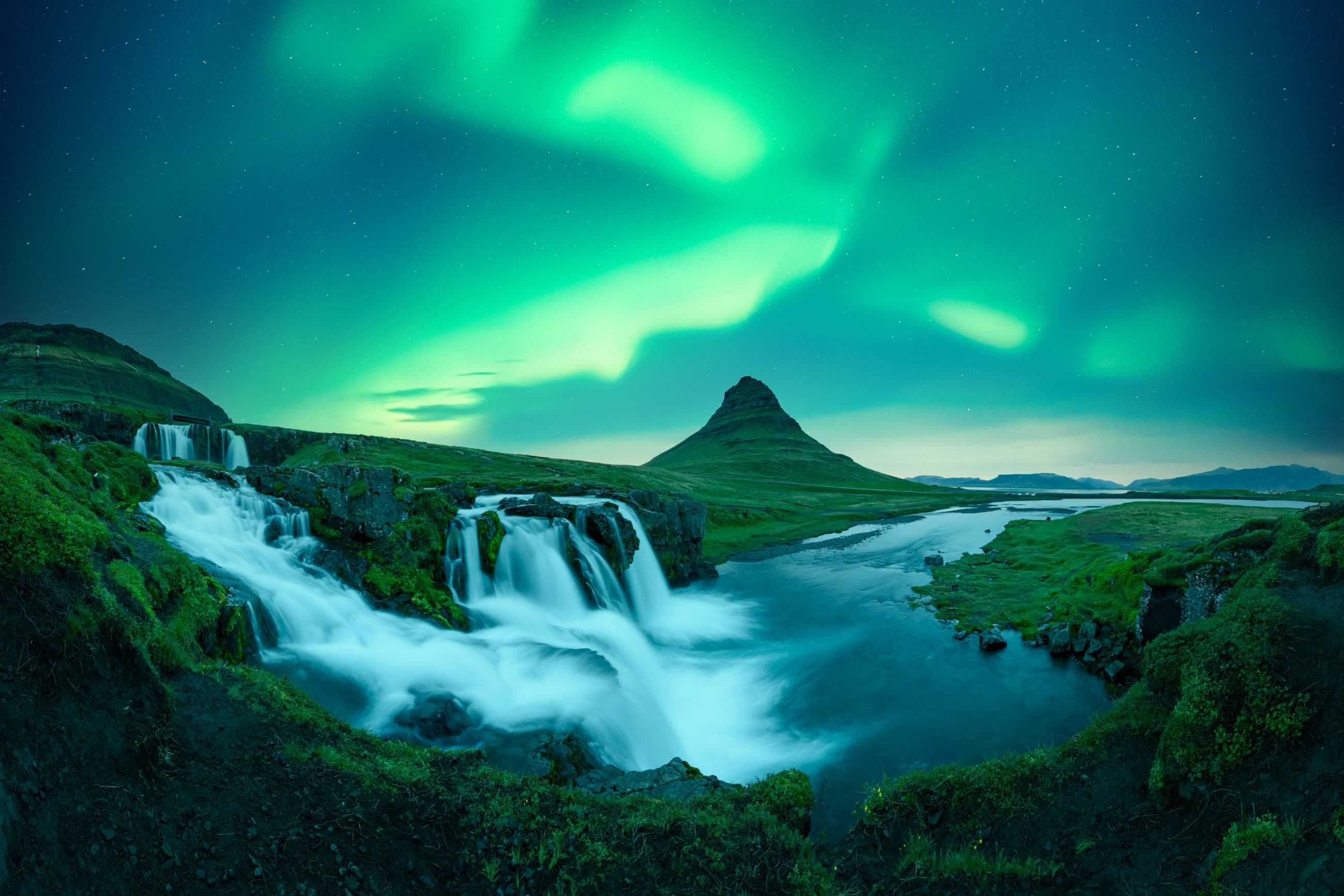
- Day 9: the Snæfellsnes peninsula as an option, “Iceland in miniature”: Kirkjufell, the Arnarstapi cliffs; otherwise, a weather buffer day.
- Day 10: an easy return to Reykjavik, a geothermal pool or one last museum, drop off the car.
Golden Circle and south coast: the concentrate of the first three days
The Golden Circle deserves its reputation as a warm-up act: at Þingvellir, you literally walk between the European and American tectonic plates; at Geysir, Strokkur erupts every 8 to 10 minutes, a guaranteed column of boiling water; and Gullfoss hurls its double 32 m drop into a steaming canyon. The south coast then strings together the images of Iceland you knew before you ever set foot there: Seljalandsfoss, with a path that passes behind the falls (waterproof essential), Skógafoss and its staircase to the top, then Reynisfjara near Vík, a black beach lined with basalt columns. One serious warning about the latter: never turn your back on the ocean, its rogue waves catch visitors out every year.
Jökulsárlón: the high point, and it deserves two nights
The Jökulsárlón glacier lagoon is the moment nobody forgets: blue-tinged icebergs calved from the Breiðamerkurjökull glacier drift towards the sea, seals swim between the blocks, and just opposite, the Diamond Beach displays its pieces of polished ice on the black sand. It is also the reason to sleep two nights in the Skaftafell-Höfn area if your schedule allows: the evening and morning light there are radically different, and the Skaftafell hikes, at the foot of Europe's largest ice cap, are worth half a day on their own. This is the densest stretch of the trip: any shortcut here is paid for in regret.
Fjords of the East and Mývatn: the reward for completing the loop
Many visitors turn back after Jökulsárlón: that is exactly why you should keep going. The fjords of the East unfurl an almost deserted corniche road dotted with fishing villages, with the detour we always recommend: Seyðisfjörður, an artists' town at the bottom of its hairpin descent. Then the north changes register completely: Dettifoss, the most powerful waterfall in Europe, thunders in its grey canyon, and Lake Mývatn lines up pseudocraters, the steaming solfataras of Hverir and geothermal baths where you can end the day at 40°C. On the road to Akureyri, a town of 20,000 people and the true capital of the North, Goðafoss offers the best-value photo stop on the island: a two-minute walk from the car park.
Which car? A standard one is enough in summer
There is no need to overpay for a big 4x4 on this itinerary: Route 1 is asphalted along almost its entire length, and a standard car is perfectly adequate from mid-June to mid-September, Golden Circle and Snæfellsnes included. A 4x4 only becomes mandatory for the F-roads of the Highlands (Landmannalaugar, Askja), open only from mid-June to mid-September, which are not part of this loop. Two genuine recommendations, though: take the gravel protection, as windscreen chips are the most common claim on the island, and fill up in the larger towns, as fuel is expensive and the stations thin out in the East.
- Real distance: 1,300 km for the official loop, more like 1,800 to 2,000 km with the detours; only one day exceeds 4 hours at the wheel in this plan.
- Budget: €120 to €200 per day per person (double room €80 to €150, meals €40 to €60, activities €30 to €50); Iceland is a trip you prepare, not one you improvise.
- Accommodation: book 6 to 9 months ahead for July-August, as the well-placed guesthouses on the south coast go first.
- Currency: the Icelandic króna (around 145 ISK to €1), but cards are accepted absolutely everywhere, down to the smallest food truck.
- Time difference: 1 hour behind in winter, 2 hours in summer; the island stays on UTC+0 all year round, handy for calls to Luxembourg.
Ten days, one direction of travel, stages that breathe: that is the skeleton. What we add for our travellers is the rest: accommodation booked at the right moment, alternatives when a storm closes a pass, and a road book that tells you each morning what is worth the detour given the day's weather. Tell us your dates: we will build your version of the loop, margin included.
An itinerary built around you, with no packages and no middlemen?
Let's talk about your trip